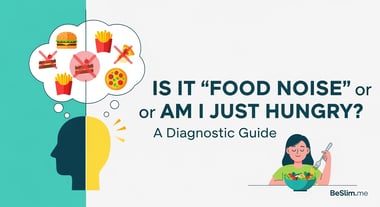
Hello, I'm Master Kim, your Behavioral Psychologist and Solution Consultant at BeSlim.me. In this Q&A explainer, we'll dive into the common struggle of binge eating triggered by dieting—a cycle many face on their wellness journey. We'll address key questions with empathy, science-backed insights, and practical steps to help you break free. Remember, this isn't about perfection; it's about sustainable progress rooted in understanding your mind and body.
Feeling Trapped in the Diet-Binge Cycle? You're Not Alone
Q: I've tried so many diets, but I always end up bingeing. Is there something wrong with me?
A: Absolutely not—you're not alone in this struggle, and it's completely normal to feel frustrated or defeated when diets lead to binge eating. Many people experience this vicious cycle: you start a restrictive diet with the best intentions, only to find yourself raiding the fridge late at night, overwhelmed by guilt afterward. This isn't a sign of weak willpower; it's a natural response to how our brains and bodies are wired. As a behavioral psychologist, I've seen this pattern in countless clients, and the good news is that recognizing it is the first step toward change. By ditching the rigid "diet mentality," you can rebuild a healthier relationship with food. Let's explore why this happens and how to move forward.
Why Does Dieting Often Lead to Binge Eating? The Psychological and Behavioral Breakdown
Q: What's really going on psychologically when dieting triggers binge eating?
A: At its core, the "ditch the diet" binge eating hurdle stems from a mix of psychological, behavioral, and hormonal factors that turn restriction into rebellion. Let's break it down accessibly, drawing from behavioral science.
First, consider habit loops, a concept from behavioral psychology popularized by researchers like Charles Duhigg. Diets often create a cue-reward system where restriction (the cue) builds tension, leading to bingeing as a "reward" for deprivation. This loop reinforces itself because bingeing provides a quick dopamine hit, making it harder to break. Psychologically, restrictive diets foster a scarcity mindset—your brain perceives food as limited, triggering survival instincts that scream, "Eat now while you can!" This is why after weeks of calorie-counting, a single "cheat" can spiral into a full binge.
On the hormonal side, dieting disrupts key regulators like cortisol and ghrelin. Chronic restriction elevates cortisol (the stress hormone), which increases cravings for high-calorie foods as a stress response, according to studies from the National Institutes of Health. Meanwhile, ghrelin, your hunger hormone, spikes during deprivation, making you feel ravenous. Combine this with willpower depletion—a phenomenon where self-control acts like a finite resource, as explained in ego depletion theory by psychologist Roy Baumeister. After days of resisting temptations, your mental reserves run low, paving the way for impulsive eating.
Behaviorally, diets often label foods as "good" or "bad," creating all-or-nothing thinking. This black-and-white mindset leads to the "what-the-hell effect," where one slip-up (like eating a cookie) makes you think, "I've blown it, so I might as well eat the whole box." Research supports this: A study in the Journal of Abnormal Psychology found that dieters are more prone to bingeing due to this cognitive distortion.
In essence, dieting doesn't address root behaviors; it amplifies them. By understanding these mechanisms—habit loops, hormonal shifts, and cognitive biases—you can see that bingeing isn't a personal failure but a predictable outcome of unsustainable restriction. Scientifically, restrictive dieting is linked to higher rates of binge eating disorders, as noted by the Mayo Clinic, highlighting why "ditching the diet" is crucial for long-term success.
How Can I Ditch the Diet Mentality and Stop the Binge Cycle? Actionable Strategies
Q: What practical steps can I take right now to break free from diet-induced bingeing?
A: The key to overcoming this hurdle is shifting from restriction to mindful, sustainable habits. Below, I'll outline five specific, step-by-step strategies, each grounded in behavioral science. These are designed for immediate implementation, with examples to show how they work in real life. Focus on one or two at a time to build momentum without overwhelm.
Strategy 1: Practice Intuitive Eating to Rebuild Food Trust
Intuitive eating, developed by dietitians Evelyn Tribole and Elyse Resch, counters dieting by tuning into your body's signals rather than external rules. This reduces the deprivation that fuels binges.
- Step 1: Start a food journal without judgment—note hunger levels on a scale of 1-10 before and after meals, plus any emotions.
- Step 2: Eat when moderately hungry (around 3-4 on your scale), choosing foods that satisfy without labels.
- Step 3: After a week, reflect: Did honoring hunger prevent overeating?
Example: If you typically skip breakfast on a diet, try eating a balanced meal when you feel hungry mid-morning. A client of mine, Sarah, found that allowing herself yogurt and fruit stopped her afternoon cookie binges, as she no longer felt "starved" by noon.
Strategy 2: Disrupt Habit Loops with Mindful Pauses
Drawing from habit formation research, insert a deliberate pause to break the automatic cue-response of bingeing.
- Step 1: Identify your binge triggers (e.g., stress after work) through a quick daily log.
- Step 2: When a trigger hits, pause for 5 minutes: Set a timer, breathe deeply, and ask, "What do I really need right now?"
- Step 3: Replace the binge with a non-food alternative, like a walk or calling a friend, and note the outcome.
Example: John, who binged on chips while watching TV (a habit cue), started pausing to stretch instead. Over time, this rewired his loop, reducing binges by 70% in a month, aligning with findings on habit interruption from behavioral interventions for eating disorders.
Strategy 3: Reframe Food Rules to Eliminate All-or-Nothing Thinking
Challenge cognitive distortions by neutralizing "forbidden" foods, reducing the rebellion that leads to binges.
- Step 1: List your "bad" foods and rate your fear of them on a scale.
- Step 2: Introduce one gradually in a controlled way—e.g., have a small portion mindfully, savoring each bite.
- Step 3: Journal the experience: Did it lead to a binge, or did it feel empowering?
Example: If ice cream is your nemesis, plan a single scoop with dinner twice a week. This helped my client Mia shift from secret midnight pints to enjoying it openly, fostering balance.
Strategy 4: Manage Stress to Lower Cortisol-Driven Cravings
Since elevated cortisol from dieting amps up emotional eating, incorporate stress-reduction techniques.
- Step 1: Track stress levels daily and link them to eating urges.
- Step 2: Practice a 10-minute daily ritual, like progressive muscle relaxation or meditation.
- Step 3: Before eating, check if it's physical hunger or stress—hydrate or journal if it's the latter.
Example: During a high-stress week, instead of bingeing on takeout, Lisa used guided breathing apps, which curbed her urges and improved her overall mood.
Strategy 5: Build a Support System for Accountability
Behavioral change thrives with social support, as social psychology shows accountability boosts adherence.
- Step 1: Share your goals with a trusted friend or join an online community like BeSlim.me forums.
- Step 2: Schedule weekly check-ins to discuss wins and setbacks without judgment.
- Step 3: Celebrate small victories, like a binge-free day, with non-food rewards.
Example: Tom partnered with his spouse for meal planning, turning solo struggles into shared successes, which sustained his progress.
These strategies emphasize gradual, compassionate change—remember, sustainability beats quick fixes.
Final Thoughts: Change Is Possible, One Step at a Time
Q: Will I ever truly break free from this cycle?
A: Yes, absolutely—change is not only possible but within your reach. By ditching the diet mentality and embracing these science-backed strategies, you're rewiring your relationship with food for the long haul. Be patient with yourself; slips are learning opportunities, not failures. You've got the inner strength to overcome this, and at BeSlim.me, we're here to support you every step. Start small today, and watch how freedom from binges transforms your life.
References
- Increases cravings for high-calorie foods as a stress response - ncbi.nlm.nih.gov
- Restrictive dieting is linked to higher rates of binge eating disorders - mayoclinic.org
- Behavioral interventions for eating disorders - healthline.com


Medical Disclaimer
The content on this website is for informational and educational purposes only. It is not intended as medical advice and should not be relied upon as a substitute for consultations with qualified healthcare professionals who are familiar with your individual medical needs. Always seek the advice of your physician or other qualified healthcare provider with any questions you may have regarding a medical condition. Never disregard professional medical advice or delay in seeking it because of something you have read on this website.