Hello, I'm Master Kim, the founder and Chief Scientific Officer of BeSlim.me. Over the years, I've dedicated my career to understanding the intricacies of human metabolism, drawing from my own experiences with weight management and the latest in nutritional science. If you've ever wondered why some fats seem to "work against you" while others might actually help burn calories, you're not alone—I've been there too. In this explainer, we'll break down white fat, brown fat, and beige fat in a way that's easy to grasp, empowering you to make informed choices about your health. Let's dive into the science behind these fascinating adipose tissues.
The Fundamentals of Adipose Tissue
Adipose tissue, commonly known as body fat, plays a crucial role in energy storage, insulation, and hormone regulation. At its core, it's composed of adipocytes—specialized cells that store lipids and respond to various signals in the body. The distinction between white, brown, and beige fat lies in their cellular structure, function, and how they interact with metabolic pathways.
White adipose tissue (WAT) primarily stores energy in the form of triglycerides, acting as a long-term energy reserve. In contrast, brown adipose tissue (BAT) is specialized for thermogenesis, generating heat by burning fats and sugars. Beige fat, often called "brite" fat, emerges as an adaptive form within white fat depots, exhibiting characteristics of both. These differences stem from unique mitochondrial densities and gene expressions that dictate their behaviors.
To enhance understanding, a simple comparison table would be ideal here:
| Fat Type | Primary Function | Location in Body | Key Characteristic |
|---|---|---|---|
| White Fat | Energy storage | Subcutaneous and visceral areas | Large lipid droplets, few mitochondria |
| Brown Fat | Heat production | Neck, upper back, around organs | High mitochondrial content, rich in iron |
| Beige Fat | Adaptive thermogenesis | Within white fat depots | Inducible, with intermediate mitochondrial levels |
This table highlights the core distinctions at a glance. Biologically, these tissues are regulated by hormones like norepinephrine, which activates beta-adrenergic receptors on adipocytes. In brown and beige fats, this signaling cascade triggers uncoupling protein 1 (UCP1) expression, leading to proton leakage in mitochondria and heat generation instead of ATP production. White fat, however, lacks significant UCP1, focusing instead on lipogenesis via insulin-mediated pathways. Understanding these mechanisms reveals why not all fats are created equal in terms of metabolic health.
White Fat: The Energy Storage Powerhouse
White adipose tissue dominates in adults, comprising about 20-25% of body weight in healthy individuals. Its primary mechanism involves storing excess calories as triglycerides within large, unilocular lipid droplets. This process is driven by insulin signaling, where glucose transporters (GLUT4) facilitate glucose uptake, and enzymes like lipoprotein lipase break down circulating fats for storage.
At the cellular level, white adipocytes respond to anabolic hormones such as insulin, which activates the PI3K-Akt pathway. This pathway promotes lipogenesis by upregulating enzymes like fatty acid synthase, ensuring efficient energy hoarding. However, when energy demand rises, hormones like glucagon and epinephrine trigger lipolysis through cyclic AMP (cAMP)-dependent protein kinase A (PKA), breaking down triglycerides into free fatty acids and glycerol for release into the bloodstream.
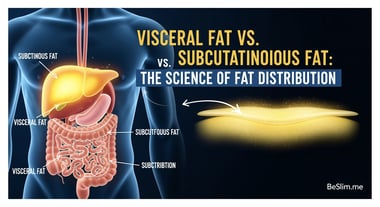
Excess white fat, particularly visceral deposits, can lead to metabolic issues due to chronic inflammation. Adipokines like leptin and adiponectin, secreted by white fat, regulate appetite and insulin sensitivity, but imbalances contribute to conditions such as obesity-related insulin resistance. For instance, elevated white fat accumulation is linked to increased risk of type 2 diabetes, as supported by studies showing how proinflammatory cytokines from hypertrophied adipocytes disrupt insulin signaling.
A diagram illustrating the lipogenesis and lipolysis pathways in white adipocytes would greatly aid visualization—depicting insulin's role in storage versus catecholamines in breakdown. This fat type's "why" is evolutionary: it provided survival advantages in times of food scarcity, but in modern abundance, it often becomes a liability for weight management.
Brown Fat: The Heat-Generating Specialist
Brown adipose tissue stands out for its thermogenic properties, primarily found in newborns and hibernating animals but present in adults around the neck, clavicles, and spine. Its high mitochondrial density, enriched with UCP1, allows it to uncouple oxidative phosphorylation, dissipating energy as heat rather than storing it.
The mechanism begins with cold exposure or beta-adrenergic stimulation, where norepinephrine binds to receptors, elevating cAMP levels. This activates PKA, which phosphorylates transcription factors like CREB, leading to UCP1 gene expression. In mitochondria, UCP1 creates a proton leak across the inner membrane, bypassing ATP synthase and generating heat. Brown fat also has multilocular lipid droplets and dense vascularization, enabling rapid fatty acid oxidation via beta-oxidation pathways.
This tissue's activity is crucial for non-shivering thermogenesis, helping maintain core body temperature. Research indicates that active brown fat can enhance energy expenditure and improve glucose homeostasis, potentially aiding in obesity prevention. The "why" behind brown fat's design is adaptive thermoregulation—essential for survival in cold environments, and its activation could be harnessed for metabolic benefits in humans.
To better illustrate, a diagram comparing mitochondrial function in brown versus white fat cells would be helpful, showing the proton gradient and heat dissipation in BAT.
Beige Fat: The Transformative Bridge
Beige fat represents an inducible form of thermogenic adipose tissue that arises within white fat depots through a process called "browning." Unlike innate brown fat, beige adipocytes are recruited in response to stimuli like cold, exercise, or certain hormones, transforming white-like cells into heat-producing ones.
The underlying mechanism involves transcriptional reprogramming. Beta-adrenergic signaling, similar to brown fat, induces PRDM16—a key regulator that promotes UCP1 expression and mitochondrial biogenesis. Additionally, irisin, a myokine released during exercise, activates p38 MAPK pathways, enhancing PGC-1α activity to drive browning. Beige fat cells develop multilocular droplets and increased mitochondria, exhibiting intermediate thermogenic capacity.
This adaptability makes beige fat a promising target for metabolic therapies. Studies show that beige fat activation may contribute to weight loss by increasing calorie burning, with evidence from animal models demonstrating improved insulin sensitivity. The "why" of beige fat is evolutionary plasticity—allowing organisms to adapt to environmental stresses without relying solely on fixed brown fat reserves.
For clarity, the earlier comparison table could be expanded here to include triggers for beige fat activation, such as cold exposure versus genetic predisposition for brown fat.
As we wrap up the science, remember that these fats aren't static; lifestyle factors can influence their balance. In my journey at BeSlim.me, I've seen how knowledge like this empowers real change.
Now, let's turn this information into actionable steps for you. First, incorporate cold exposure—like cooler showers or time in chilly environments—to potentially activate brown and beige fats, boosting your metabolism naturally. Second, engage in regular exercise, especially high-intensity intervals, to promote browning and enhance overall fat utilization. Third, focus on a balanced diet rich in anti-inflammatory foods to manage white fat accumulation and support metabolic health. By understanding these mechanisms, you can take control of your body's fat dynamics—start small, stay consistent, and watch the transformations unfold.
References


Medical Disclaimer
The content on this website is for informational and educational purposes only. It is not intended as medical advice and should not be relied upon as a substitute for consultations with qualified healthcare professionals who are familiar with your individual medical needs. Always seek the advice of your physician or other qualified healthcare provider with any questions you may have regarding a medical condition. Never disregard professional medical advice or delay in seeking it because of something you have read on this website.