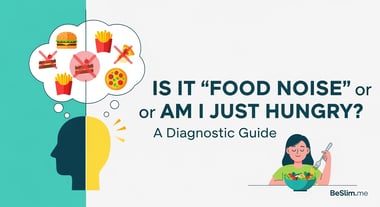
Hello, I'm Master Kim, your Behavioral Psychologist and Solution Consultant at BeSlim.me. If you're reading this, you might be grappling with the relentless mental chatter about food—those persistent thoughts, cravings, and distractions that make healthy eating feel like an uphill battle. You're not alone in this; many people with ADHD experience this phenomenon known as "food noise," and it's completely normal to feel overwhelmed by it. As someone who's helped countless individuals navigate these challenges, I want to assure you that understanding the connection can be the first step toward quieting that noise and reclaiming control. In this Q&A explainer, we'll dive into the psychological and behavioral links between ADHD and food noise, backed by science, and equip you with practical strategies to manage it. Let's get started.
What Exactly Is 'Food Noise' in the Context of ADHD?
Q: I've heard the term 'food noise'—what does it mean, especially for someone with ADHD?
A: "Food noise" refers to the constant, intrusive thoughts about food that can dominate your mind, such as sudden cravings, obsessive planning around meals, or difficulty focusing on anything else when hunger strikes. For individuals with ADHD, this isn't just about being hungry; it's amplified by the brain's unique wiring. Imagine your mind as a busy highway where thoughts zoom by— in ADHD, the traffic is heavier and harder to control, making food-related distractions feel like persistent roadblocks. This can lead to impulsive eating, emotional overeating, or even avoidance of structured meals, all of which complicate weight management and overall well-being.
This experience is deeply tied to ADHD's core symptoms like inattention, hyperactivity, and impulsivity. It's not a lack of willpower; it's a neurological reality that many face, and recognizing it with compassion is key to addressing it.
The 'Why' Diagnosis: Understanding the Psychological and Behavioral Link
Q: Why does ADHD seem to intensify 'food noise'? What's happening in the brain?
A: The link between ADHD and food noise stems from the brain's dopamine system and how it influences reward, impulse control, and attention—core areas often disrupted in ADHD. Dopamine is a neurotransmitter that acts like the brain's "motivation molecule," helping us feel pleasure and stay focused on tasks. In people with ADHD, there's often a dysregulation in dopamine signaling, leading to a constant search for stimulation to "top up" those levels. Food, especially high-sugar or high-fat options, provides a quick dopamine hit, creating a cycle where thoughts about eating become a go-to distraction.
From a behavioral perspective, this ties into habit loops, a concept from behavioral psychology where cues (like stress or boredom) trigger automatic responses (cravings) that lead to rewards (eating for relief). For someone with ADHD, executive function challenges—such as planning meals or resisting impulses—make it harder to break these loops. Hormonally, ADHD can intersect with stress responses; elevated cortisol from daily overstimulation might heighten emotional hunger, making food noise feel like an escape valve.
Scientifically, research shows that individuals with ADHD are more prone to emotional eating and obesity due to these mechanisms. For instance, studies on ADHD and impulsivity in eating behaviors highlight how dopamine deficits contribute to seeking immediate rewards from food. This isn't about personal failure; it's a neurobiological hurdle. Another key insight comes from research linking ADHD to altered reward processing in the brain, which explains why mundane tasks feel boring, pushing the mind toward exciting distractions like food thoughts. By understanding this, we can shift from self-blame to strategic action, focusing on sustainable changes that rewire these patterns over time.
(Word count note: This section provides a foundational explanation without jargon overload, setting the stage for solutions.)
Actionable Solutions: Strategies to Quiet Food Noise with ADHD
Q: What can I do right now to manage food noise if I have ADHD?
A: The good news is that behavioral science offers tools to interrupt these patterns and build healthier habits. Below, I'll outline five practical, step-by-step strategies. Each is designed for immediate implementation, with a focus on sustainability—think small, consistent wins rather than drastic overhauls. We'll draw from cognitive-behavioral techniques and mindfulness practices, tailored for ADHD's unique challenges like forgetfulness and impulsivity. Remember, progress comes from practice, so start with one strategy and build from there.
Strategy 1: Create a 'Dopamine Diversion' Routine
ADHD brains crave stimulation, so redirecting that energy away from food can reduce noise. This strategy leverages habit substitution, replacing food thoughts with non-food rewards.
- Step 1: Identify your top food noise triggers (e.g., boredom during work breaks or evening downtime). Keep a simple journal for a day or two to note patterns.
- Step 2: Prepare a list of quick, dopamine-boosting alternatives—like a 5-minute walk, listening to a favorite podcast, or fiddling with a fidget toy.
- Step 3: Set a visual cue, such as a phone reminder or sticky note, to prompt the diversion when a trigger hits.
- Step 4: Track your success weekly; if you divert successfully three times, reward yourself with something non-food related, like new stickers for your journal.
Example: Sarah, who has ADHD, noticed food noise peaking during afternoon slumps. She started a "diversion dance"—a quick stretch and upbeat song—instead of snacking, which quieted the chatter and boosted her focus.
Strategy 2: Implement Mindful Eating Check-Ins
Mindfulness helps ADHD individuals pause impulsive thoughts, drawing from techniques like those in dialectical behavior therapy (DBT) to build awareness.
- Step 1: Before eating, pause for 10 seconds and ask: "Am I physically hungry, or is this emotional noise?"
- Step 2: Rate your hunger on a scale of 1-10 and note any emotions (e.g., anxiety from a deadline).
- Step 3: If it's noise-driven, delay eating by 5 minutes and engage in deep breathing—inhale for 4 counts, hold for 4, exhale for 4.
- Step 4: After eating, reflect briefly: What worked? Adjust for next time, like prepping healthier options.
Scenario: During a stressful meeting, Alex felt overwhelming cravings. A quick check-in revealed it was stress, not hunger, so he opted for tea and a walk, reducing the noise over time.
Strategy 3: Structure Your Environment for Success
ADHD thrives on external cues, so "choice architecture" from behavioral economics can minimize food noise by making healthy options easier.
- Step 1: Rearrange your kitchen—place fruits and veggies at eye level, hide tempting snacks.
- Step 2: Use apps or timers for meal planning; set reminders for balanced snacks every 3-4 hours to prevent hunger spikes.
- Step 3: Create "no-noise zones" (e.g., your workspace) free of food cues, like removing vending machine access.
- Step 4: Review and tweak your setup weekly based on what reduces distractions.
Illustration: Mike, struggling with late-night food noise, moved junk food to a high shelf and prepped veggie packs. This simple change cut impulsive eating by half within a week.
Strategy 4: Build a Supportive Habit Stack
Stacking habits uses ADHD's momentum to layer positive behaviors, reducing the mental load of decision-making.
- Step 1: Choose an existing routine (e.g., morning coffee) and attach a food-noise buster, like planning your day's meals.
- Step 2: Add one small habit, such as drinking water first when a craving hits, to hydrate and pause.
- Step 3: Partner with an accountability buddy—share daily wins via text to reinforce the stack.
- Step 4: Scale up gradually; once comfortable, add journaling about noise patterns.
Example: Emma stacked her evening wind-down with a gratitude list, including one non-food joy, which shifted her focus and weakened food noise over months.
Strategy 5: Incorporate Sensory Tools for Regulation
Sensory strategies address ADHD's hyperactivity by providing calming inputs, supported by evidence on sensory integration therapy for ADHD management, which can indirectly quiet food-related distractions.
- Step 1: Identify sensory preferences (e.g., textures, sounds) that soothe you.
- Step 2: Prepare tools like stress balls, essential oils, or white noise apps.
- Step 3: When noise arises, engage a tool for 2-3 minutes before deciding on food.
- Step 4: Log effectiveness and rotate tools to keep it engaging.
Case: For Jordan, chewing gum during high-noise times provided oral sensory input, mimicking eating without calories, and helped sustain focus.
These strategies are rooted in evidence-based behavioral science, emphasizing gradual change to avoid overwhelm—perfect for ADHD brains.
Common Myths and FAQs About ADHD and Food Noise
Q: Is food noise just a willpower issue, or is it really linked to ADHD?
A: It's not about willpower; it's neurological. Myths like "just try harder" ignore the dopamine and impulse challenges in ADHD. Instead, focus on strategies that work with your brain, not against it.
Q: Can medication help with food noise in ADHD?
A: Yes, ADHD medications like stimulants can improve impulse control and reduce noise by stabilizing dopamine. However, combine them with behavioral strategies for best results—consult your doctor.
Q: How long until I see changes?
A: Noticeable shifts can happen in 2-4 weeks with consistency, but full habit change takes 1-3 months. Be patient; small wins add up.
Encouragement Closing
Remember, dealing with ADHD and food noise doesn't define you—it's just one part of your journey, and change is absolutely possible with the right tools and self-compassion. You've already taken a powerful step by seeking understanding here at BeSlim.me. Start small, celebrate your progress, and know that quieter days are ahead. If the noise feels too loud, reach out for personalized support; you're capable of building a healthier, more peaceful relationship with food. Keep going—you've got this!
References
- Studies on ADHD and impulsivity in eating behaviors - ncbi.nlm.nih.gov
- Research linking ADHD to altered reward processing in the brain - mayoclinic.org
- Evidence on sensory integration therapy for ADHD management - my.clevelandclinic.org


Medical Disclaimer
The content on this website is for informational and educational purposes only. It is not intended as medical advice and should not be relied upon as a substitute for consultations with qualified healthcare professionals who are familiar with your individual medical needs. Always seek the advice of your physician or other qualified healthcare provider with any questions you may have regarding a medical condition. Never disregard professional medical advice or delay in seeking it because of something you have read on this website.