Hello, I'm Master Kim, your Behavioral Psychologist and Solution Consultant at BeSlim.me. If you've ever felt like your mind is constantly buzzing with thoughts about food—cravings that won't quit, mental debates over what to eat next, or an overwhelming urge to snack even when you're not hungry—you're not alone. This is a struggle millions face, and it's completely normal in our fast-paced, food-abundant world. As we look ahead to 2026, with advances in behavioral science and weight management tools, understanding "food noise" can be a game-changer for your journey to better health. In this Q&A explainer, I'll break it down with empathy, science-backed insights, and practical steps to quiet the noise. Let's dive in.
Q: What Exactly Is 'Food Noise'?
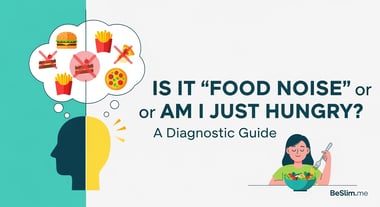
A: "Food noise" refers to the persistent, intrusive thoughts and mental chatter about food that can dominate your mind, making it hard to focus on anything else. It's like a constant background hum of cravings, temptations, and preoccupations—wondering when your next meal is, fixating on forbidden treats, or feeling an emotional pull toward eating even when your body doesn't need it. This term has gained traction in recent years, especially with the rise of GLP-1 medications like semaglutide (e.g., Ozempic or Wegovy), which many users report "silence" this noise by reducing appetite signals.
From a behavioral psychology perspective, food noise isn't just about hunger; it's a psychological hurdle intertwined with habits, emotions, and biology. It's particularly common in people dealing with weight management, emotional eating, or dieting plateaus. The good news? Recognizing it is the first step toward control. In 2026, with emerging tools like AI-driven habit trackers and personalized neurofeedback apps, we're better equipped than ever to address it.
Q: Why Does Food Noise Happen? The Underlying Causes
A: Food noise doesn't appear out of nowhere—it's rooted in a mix of psychological, behavioral, and hormonal factors. Let's unpack this in accessible terms, drawing from behavioral science to help you understand why your brain might be "noisy" about food.
At its core, food noise often stems from habit loops, a concept from behavioral psychology where cues (like stress or boredom) trigger automatic thoughts and actions around eating. For instance, if you've conditioned yourself to reach for snacks during work breaks, your brain creates a loop: cue → craving → reward. This is amplified by dopamine, the "feel-good" neurotransmitter that reinforces these habits, making food thoughts feel urgent and rewarding.
Hormonally, imbalances play a big role. Chronic stress elevates cortisol, which can spike hunger hormones like ghrelin while suppressing satiety signals from leptin. This creates a biological urge for comfort foods, turning mild thoughts into overwhelming noise. According to research, chronic stress can alter brain circuits involved in reward and impulse control, leading to heightened food preoccupation.
Psychologically, food noise ties into emotional regulation. Many people use food to cope with feelings like anxiety or loneliness, a behavior known as emotional eating. Willpower depletion—when your mental energy is drained from daily decisions—makes it harder to resist these thoughts, as explained by the ego depletion theory. In a 2026 context, with increasing screen time and ultra-processed foods designed to hijack our reward systems, this noise is louder than ever. Scientifically, studies show that exposure to food cues in advertising can increase neural activity in reward-related brain areas, fueling the mental chatter.
Finally, evolutionary biology adds context: Our ancestors survived scarcity, so our brains are wired to fixate on food sources. In today's abundance, this wiring backfires, creating noise. The key takeaway? Food noise is a normal response to modern life, not a personal failing. By understanding these mechanisms, you can start rewiring them for quieter, more intentional eating.
Q: How Can I Quiet Food Noise? Actionable Strategies
A: The great thing about food noise is that it's not permanent—with targeted behavioral changes, you can turn down the volume and build sustainable habits. Below, I'll outline five practical, step-by-step strategies rooted in behavioral science. Each one includes real-life examples to make them easy to apply. Focus on progress over perfection; small wins add up.
Strategy 1: Identify and Interrupt Habit Loops
Start by mapping your personal habit loops to spot what triggers food noise. This draws from Charles Duhigg's habit model, emphasizing cue, routine, and reward.
- Step 1: Keep a 3-day "noise journal." Note when food thoughts arise (e.g., "3 PM slump at work") and what cues them (stress, boredom).
- Step 2: Interrupt the loop with a 5-minute alternative routine, like a quick walk or deep breathing.
- Step 3: Replace the reward—swap a sugary snack for herbal tea that still feels comforting.
- Example: If scrolling social media cues cravings, set a timer to switch to a non-food podcast. Over time, this disrupts the automatic noise, fostering mindful awareness.
Strategy 2: Manage Stress to Balance Hormones
Since cortisol fuels food noise, proactive stress management can recalibrate your hormones for fewer cravings.
- Step 1: Practice daily mindfulness for 10 minutes, such as guided meditation via an app.
- Step 2: Incorporate stress-busting activities like yoga or journaling to lower cortisol levels.
- Step 3: Track progress by noting reduced noise intensity after a week.
- Example: A busy parent might use evening journaling to process the day's stress, preventing late-night snacking urges. Research supports this: mindfulness-based interventions can reduce emotional eating by modulating stress responses.
Strategy 3: Build Willpower Through Environmental Design
Counter willpower depletion by redesigning your surroundings to minimize food cues, making resistance easier.
- Step 1: Audit your environment—remove visible temptations like desk snacks.
- Step 2: Create "friction" for unhealthy choices (e.g., store treats out of sight) and ease for healthy ones (prep veggies in advance).
- Step 3: Set micro-goals, like one noise-free hour daily, and reward yourself non-food ways (e.g., a favorite show).
- Example: In a home office, keep a fruit bowl visible but hide chips in a high cabinet. This reduces mental debates, as your brain encounters fewer triggers.
Strategy 4: Reframe Thoughts with Cognitive Behavioral Techniques
Use CBT-inspired methods to challenge and rewire noisy thoughts, turning them from overwhelming to manageable.
- Step 1: When noise hits, pause and label the thought (e.g., "This is just a stress craving, not true hunger").
- Step 2: Challenge it with evidence (e.g., "I ate two hours ago; I'm not starving").
- Step 3: Redirect to a positive affirmation or distraction, like calling a friend.
- Example: During a movie night, if popcorn thoughts dominate, reframe: "I can enjoy the film without it." This builds mental resilience over time.
Strategy 5: Leverage Technology and Tracking for Long-Term Change
In 2026, tech like AI apps can amplify your efforts by providing personalized insights.
- Step 1: Use a habit-tracking app to log food noise episodes and patterns.
- Step 2: Set app reminders for healthy alternatives, like hydration prompts.
- Step 3: Review weekly data to adjust strategies, celebrating reductions in noise frequency.
- Example: An app might notify you during high-noise times (e.g., evenings) to do a quick gratitude exercise, shifting focus from food to fulfillment.
These strategies emphasize sustainability—aim for consistency, not overnight miracles. Combine them for the best results, and remember, slipping up is part of the process.
Q: Is Food Noise Related to Medical Conditions or Treatments?
A: Absolutely, food noise can intersect with medical factors. For some, it's linked to conditions like insulin resistance or PCOS, where hormonal fluctuations amplify cravings. Emerging treatments, such as GLP-1 agonists, are revolutionizing this by mimicking satiety hormones, effectively "quieting" the noise for many users. However, it's not just about meds—behavioral therapy remains key. If noise feels unmanageable, consult a doctor to rule out underlying issues.
Q: Can Food Noise Be Completely Eliminated?
A: While complete silence might not be realistic for everyone, significant reduction is achievable through consistent habits and self-compassion. Think of it as tuning a radio: You can lower the static to enjoy clearer signals in life. With 2026 advancements in personalized nutrition and brain health, tools like neurofeedback could make this even more attainable.
As we wrap up, remember that overcoming food noise is a journey of empowerment. You've already taken a powerful step by seeking understanding—change is not only possible but within your reach. Be kind to yourself, celebrate small victories, and know that at BeSlim.me, we're here to support you every step of the way. You've got this!
References
- Chronic stress can alter brain circuits involved in reward and impulse control - ncbi.nlm.nih.gov
- Exposure to food cues in advertising can increase neural activity in reward-related brain areas - pubmed.ncbi.nlm.nih.gov
- Mindfulness-based interventions can reduce emotional eating by modulating stress responses - mayoclinic.org


Medical Disclaimer
The content on this website is for informational and educational purposes only. It is not intended as medical advice and should not be relied upon as a substitute for consultations with qualified healthcare professionals who are familiar with your individual medical needs. Always seek the advice of your physician or other qualified healthcare provider with any questions you may have regarding a medical condition. Never disregard professional medical advice or delay in seeking it because of something you have read on this website.