Hi, I'm Master Kim, your empathic storyteller here at BeSlim.me. I've heard so many raw, honest stories of health transformations, and today, I want to share one that's close to my heart—my own journey with my partner. We decided to stop Wegovy after a year of steady progress, not because it wasn't working, but because we wanted to test if we could maintain our new habits without it. What followed was a rollercoaster of emotions, cravings, and hard-won insights. If you've ever wondered what happens when the medication that quiets the constant "food noise" in your head is no longer there, this is for you. It's not a fairy tale; it's real, messy, and ultimately empowering. Let's dive in.
Part 1: The Struggle (The 'Before')
I remember the days before Wegovy like they were yesterday—endless battles with my own mind. For years, food wasn't just sustenance; it was a siren call that drowned out everything else. I'd wake up thinking about breakfast, plan lunch during meetings, and by evening, I'd be raiding the fridge not out of hunger, but because the noise in my head wouldn't shut up. "Food noise," as I've come to call it, was this relentless chatter: cravings for sugary snacks, emotional eating after a stressful day, and that gnawing guilt afterward. My partner and I both struggled with weight that crept up in our 30s, fueled by desk jobs, family stress, and honestly, a lack of boundaries around eating.
We'd tried everything—or so it felt. Diets that promised quick fixes left us yo-yoing: low-carb for a month, only to crash and binge on pasta. Gym memberships gathered dust after the initial enthusiasm faded. I recall one particularly low point: standing in front of the mirror, poking at my midsection, feeling defeated. "Why can't I just stop?" I'd whisper to myself. The emotional toll was immense—shame spiraled into isolation, avoiding social gatherings because I didn't want to face the judgment, real or imagined. My partner echoed this; we'd comfort each other with late-night talks, but deep down, we knew we were stuck in a cycle.
Medically, we were dealing with more than just willpower issues. I had prediabetes creeping in, and my partner was managing high blood pressure. Doctor visits became routine, with warnings about long-term risks. We attempted lifestyle changes: meal prepping on Sundays, tracking calories with apps, even therapy to unpack emotional eating triggers from our childhoods. But nothing stuck long-term. The food noise was too loud, overriding logic and good intentions. It felt like my brain was wired against me—constant thoughts of food hijacking my focus, leading to overeating and regret. We'd lose a few pounds, only to gain them back plus more, each failure chipping away at our self-esteem.
By the time we started Wegovy, we were desperate for relief. Prescribed by our doctor as part of a comprehensive plan, it was a game-changer initially. The injections quieted that incessant noise; suddenly, food was just food, not an obsession. We lost weight steadily—about 40 pounds combined over a year—through mindful eating and light exercise. But after 12 months, we paused. Why? Curiosity, mostly. Could we sustain this without the med? Financial reasons played a part too, as costs added up. Little did we know, stopping would unleash a storm we weren't fully prepared for.
The first few weeks off Wegovy were deceptive. Our habits held, but slowly, the food noise crept back. It started subtly: a passing thought about ice cream turning into an hour-long fixation. By month two, it was overwhelming. I'd be at work, and suddenly, my mind would fixate on the vending machine downstairs. My partner described it as "a radio turning up the volume on cravings." We gained back a few pounds, not dramatically, but enough to trigger old fears. Emotions ran high—frustration at ourselves, arguments over slipped-up dinners. It felt like regression, like all our progress was fragile. The struggle wasn't just physical; it was a mental war, reminding us how deeply ingrained these patterns were.
Part 2: The Turning Point (The 'Solution')
The turning point came around month three, when the food noise hit its peak. We were both irritable, snapping at each other over trivial things like what to cook for dinner. I remember one evening, staring at a half-eaten pizza we'd impulsively ordered, feeling that familiar wave of defeat. "This isn't us anymore," I said to my partner. We decided then to face it head-on, not by restarting Wegovy immediately (though we kept that option open), but by digging deeper into why the noise was returning and how to manage it naturally.
That's when we dove into understanding the science behind it all. It wasn't just about willpower; our bodies and brains were adapting post-medication. For instance, Wegovy works by mimicking GLP-1 hormones that regulate appetite, but stopping it can lead to a rebound in hunger signals. We learned about leptin resistance—a condition where the brain doesn't properly register the "I'm full" signals from fat cells, making overeating feel inevitable. According to research on leptin signaling and obesity, this resistance can exacerbate food noise, especially after weight loss, as the body fights to regain lost fat.
Cortisol management became our next focus. Stress was amplifying everything; those high cortisol levels from work and life pressures were fueling emotional eating. We read up on how chronic stress disrupts hunger hormones, leading to increased cravings. A study from the Mayo Clinic on stress and weight gain highlighted how cortisol can drive abdominal fat storage and intensify food obsessions. Armed with this, we started small: daily meditation apps to lower stress, journaling our triggers to spot patterns.
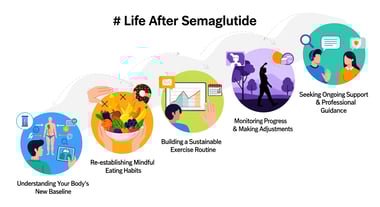
Habit formation was the real game-changer. We shifted from relying on the medication's appetite suppression to building sustainable routines. Drawing from principles in behavioral psychology, like those in James Clear's work (though we grounded it in science), we focused on cue-response-reward loops. For example, instead of fighting cravings head-on, we'd replace them: a walk when the noise started, or herbal tea instead of snacks. Scientifically, this ties into neuroplasticity—rewiring the brain through consistent actions. The CDC's guide to healthy eating habits emphasizes gradual changes for long-term success, which resonated with us.
We didn't do this alone. Consulting our doctor ensured safety, and we incorporated therapy sessions to address the emotional side. It wasn't overnight; there were slip-ups, like a weekend binge that left us deflated. But each time, we'd analyze it without self-judgment, asking, "What triggered this?" This empathetic approach—treating ourselves kindly—helped quiet the noise over time. By month four, the cravings felt manageable, not overwhelming. We were rebuilding our relationship with food, one mindful choice at a time.
Part 3: The Success (The 'After')
Six months in, and we're not just surviving without Wegovy—we're thriving. The food noise hasn't vanished entirely; it's more like background static now, not a blaring alarm. We've maintained most of our weight loss, shedding an additional 5 pounds each through these new habits. Physically, I feel lighter, more energetic—able to chase our niece around the park without huffing. My partner's blood pressure is stable, and my prediabetes markers have improved, confirmed by recent bloodwork.
But the real transformation is emotional. No more hiding from mirrors or dreading social events. We're cooking together, experimenting with nutritious meals that satisfy without excess. Life feels fuller: weekends hiking instead of lounging with takeout, deeper conversations unmarred by food guilt. We've even inspired friends, sharing our story over coffee, emphasizing that it's about progress, not perfection.
Of course, challenges linger. Holidays tested us, with temptations everywhere, but our toolkit—stress management, habit tweaks—held strong. We've learned that stopping Wegovy doesn't mean failure; it's an opportunity to solidify changes. If the noise ever amps up too much, we know we can revisit the medication, but for now, this self-reliance is empowering.
Reflecting back, this journey taught us resilience. The "after" isn't a static endpoint; it's an ongoing commitment. We've transformed not just our bodies, but our mindsets, proving that with understanding and effort, we can quiet the noise ourselves.
Key Lessons for Your Journey
Understand Your Triggers Scientifically: Dive into how hormones like leptin and cortisol influence cravings. Track your patterns to address root causes, not just symptoms—start with a simple journal.
Build Habits Gradually: Replace old routines with positive ones, like mindful walks for stress relief. Consistency over intensity wins; aim for small, daily wins to rewire your brain.
Practice Self-Compassion: Slip-ups happen—treat them as learning moments, not failures. Seek support from professionals or loved ones to maintain momentum without judgment.
References
- Research on leptin signaling and obesity - ncbi.nlm.nih.gov
- Mayo Clinic on stress and weight gain - mayoclinic.org
- CDC's guide to healthy eating habits - cdc.gov

Medical Disclaimer
The content on this website is for informational and educational purposes only. It is not intended as medical advice and should not be relied upon as a substitute for consultations with qualified healthcare professionals who are familiar with your individual medical needs. Always seek the advice of your physician or other qualified healthcare provider with any questions you may have regarding a medical condition. Never disregard professional medical advice or delay in seeking it because of something you have read on this website.