Hello, I'm Master Kim, your Empathic Storyteller and Editor for BeSlim.me. I've heard so many stories of people chasing quick fixes for weight loss, only to face the harsh reality when those fixes fade. Today, I want to share a deeply personal case study that's close to my heart—it's about Sarah, a 42-year-old teacher from Seattle who battled obesity for years. Her journey isn't one of overnight miracles; it's a raw, honest look at the emotional toll of relying on GLP-1 medications like Ozempic, the dreaded rebound effect after stopping, and the hard-won path to sustainable health. I feel for Sarah because her struggles mirror so many I've encountered— the frustration, the hope, the setbacks. As I narrate her story, remember, this is about real effort and real emotions, not shortcuts. Let's dive in.
Part 1: The Struggle (The 'Before')
I remember when Sarah first reached out to me, her voice trembling with exhaustion. She was in her late 30s, juggling a demanding job, family life, and a body that felt like it was betraying her every step of the way. At 5'6" and weighing over 220 pounds, Sarah had tried everything—diets that promised the world but left her hungry and defeated, exercise routines that started strong but fizzled out under the weight of daily stress. "I felt invisible," she told me once, tears in her eyes. "Like my body was a prison I couldn't escape."
Her emotional struggles were profound. Sarah dealt with constant self-doubt, amplified by societal pressures and her own internalized shame. Failed attempts piled up: the keto diet that crashed her energy levels, the intermittent fasting that led to binge eating episodes, and gym memberships that collected dust. Each failure chipped away at her confidence, leaving her in a cycle of yo-yo dieting that only worsened her metabolism. She confided in me that the emotional eating—turning to comfort foods during stressful parent-teacher conferences or family arguments—was her biggest hurdle. It wasn't just about the weight; it was the loneliness, the fatigue, and the fear that she'd never break free.
Then came Ozempic. Prescribed by her doctor for type 2 diabetes and weight management, it seemed like a lifeline. Sarah lost 50 pounds in six months, her appetite suppressed, her energy up. "For the first time, I felt in control," she shared. But beneath the surface, doubts lingered. The side effects—nausea, fatigue, and that nagging worry about long-term dependency—started to wear on her. When her insurance stopped covering the medication after a year, Sarah had to stop cold turkey. That's when the rebound hit hard.
The 'Ozempic rebound' isn't just a buzzword; it's a brutal reality for many. Without the drug's appetite-suppressing effects, Sarah's hunger returned with a vengeance. She gained back 30 pounds in just three months, her body seemingly punishing her for the rapid loss. Emotionally, it was devastating—she felt like a failure all over again, questioning if sustainable weight loss was even possible. "I was back to square one, but worse," she admitted. Her cortisol levels spiked from the stress, fueling more emotional eating and sleep disruptions. Failed attempts to "just eat less" only led to more frustration. I empathized deeply with her; I've seen this pattern in so many stories, where quick fixes mask deeper issues without addressing the root causes.
Part 2: The Turning Point (The 'Solution')
The moment of change came during a particularly low point for Sarah. It was a rainy afternoon in Seattle, and she was scrolling through health forums, feeling utterly defeated by the rebound weight. That's when she stumbled upon a community discussion about sustainable weight management post-GLP-1s. Intrigued, she reached out to a nutritionist who specialized in metabolic health, and that's where her real transformation began. I was thrilled when she shared this with me—it was the spark of hope she'd been missing.
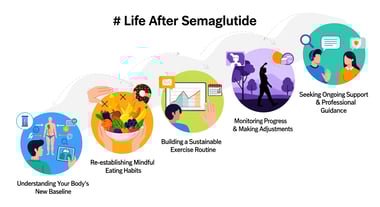
Sarah's new approach wasn't about another diet or pill; it was a holistic shift focusing on understanding her body's signals and building lasting habits. She started by addressing leptin resistance, a common issue after rapid weight loss where the hormone leptin— which signals fullness to the brain—doesn't work effectively, leading to increased hunger. By incorporating balanced meals with whole foods, she began to reset her body's sensitivity to these signals. Scientifically, this ties into how prolonged calorie restriction can disrupt leptin pathways, but gradual reintroduction of nutrients helps restore balance leptin resistance and its role in obesity.
Cortisol management became another key pillar. Sarah learned that chronic stress from her job and the rebound anxiety was elevating her cortisol, the stress hormone that promotes fat storage, especially around the abdomen. She integrated simple practices like daily walks in nature and mindfulness meditation to lower these levels. Research supports this: managing cortisol through lifestyle changes can improve weight maintenance by reducing inflammation and emotional eating triggers cortisol's impact on weight gain and stress management.
Finally, habit formation was the glue that held it all together. Drawing from principles of behavioral psychology, Sarah used small, consistent actions—like tracking her meals without judgment and setting non-scale victories, such as better sleep or more energy. This wasn't about perfection; it was about rewiring her brain for long-term success. Studies show that habit formation through repeated, rewarding behaviors can lead to sustainable changes in eating patterns habit formation in weight loss and behavior change. I encouraged her every step, reminding her that this was her journey, not a race. The turning point wasn't a single "aha" moment but a series of small choices that built momentum, helping her move beyond the GLP-1 dependency.
Part 3: The Success (The 'After')
One year after stopping Ozempic and embracing her new approach, Sarah's life has transformed in ways she never imagined. She's lost 40 pounds sustainably—not through suppression, but through nourishment and balance. More importantly, her energy levels are steady, her diabetes markers have improved, and she no longer dreads the scale. "I feel like myself again," she told me recently, her voice full of quiet pride. Physically, she's active—hiking with her family on weekends, something that once felt impossible. Emotionally, the victories are even sweeter: reduced anxiety, better sleep, and a newfound confidence that radiates in her teaching and relationships.
The transformation extended beyond her body. Sarah's relationship with food has healed; she enjoys meals mindfully, without the guilt that plagued her before. Her family notices the change too—dinners are now about connection, not restriction. Professionally, she's more present, handling stress with tools like deep breathing instead of snacks. It's not perfect—there are still tough days—but the rebound weight is a distant memory, replaced by a resilient mindset.
The lessons learned are profound. Sarah realized that quick fixes like GLP-1s can jumpstart progress, but true success comes from addressing the psychological and behavioral roots. Consistency over intensity, self-compassion over criticism—these became her mantras. I admire her courage; her story reminds me that every setback is a setup for a stronger comeback. In sharing this, I hope it inspires you to honor your own struggles and seek sustainable paths.
Key Lessons for Your Journey
Address Hormonal Imbalances Holistically: If you've experienced rebound after medications like Ozempic, focus on resetting leptin and cortisol through balanced nutrition and stress reduction—start with one small change, like adding protein-rich snacks to stabilize hunger.
Build Habits Gradually: Don't overhaul everything at once; use habit-stacking techniques, such as pairing a short walk with your morning coffee, to create lasting routines that support weight maintenance without burnout.
Prioritize Emotional Well-Being: Weight loss is as much mental as physical—practice self-compassion daily, perhaps through journaling your wins, to break the cycle of emotional eating and build resilience for the long haul.
References
- leptin resistance and its role in obesity - ncbi.nlm.nih.gov
- cortisol's impact on weight gain and stress management - mayoclinic.org
- habit formation in weight loss and behavior change - healthline.com

Medical Disclaimer
The content on this website is for informational and educational purposes only. It is not intended as medical advice and should not be relied upon as a substitute for consultations with qualified healthcare professionals who are familiar with your individual medical needs. Always seek the advice of your physician or other qualified healthcare provider with any questions you may have regarding a medical condition. Never disregard professional medical advice or delay in seeking it because of something you have read on this website.