Hello, I'm Master Kim, the founder and Chief Scientific Officer of BeSlim.me. As someone who's dedicated years to helping people unlock their metabolic potential through science-backed strategies, I know how confusing terms like BMR and RMR can be. If you've ever wondered why your body burns calories even at rest or how this ties into your weight management journey, you're not alone. I've been there myself, sifting through research to make sense of it all. In this guide, we'll clarify the differences, dive into the science, and equip you with practical insights to optimize your metabolism. Let's get started on empowering you with knowledge that can transform your health.
Section 1: Defining BMR and RMR – The Basics of Metabolic Rates
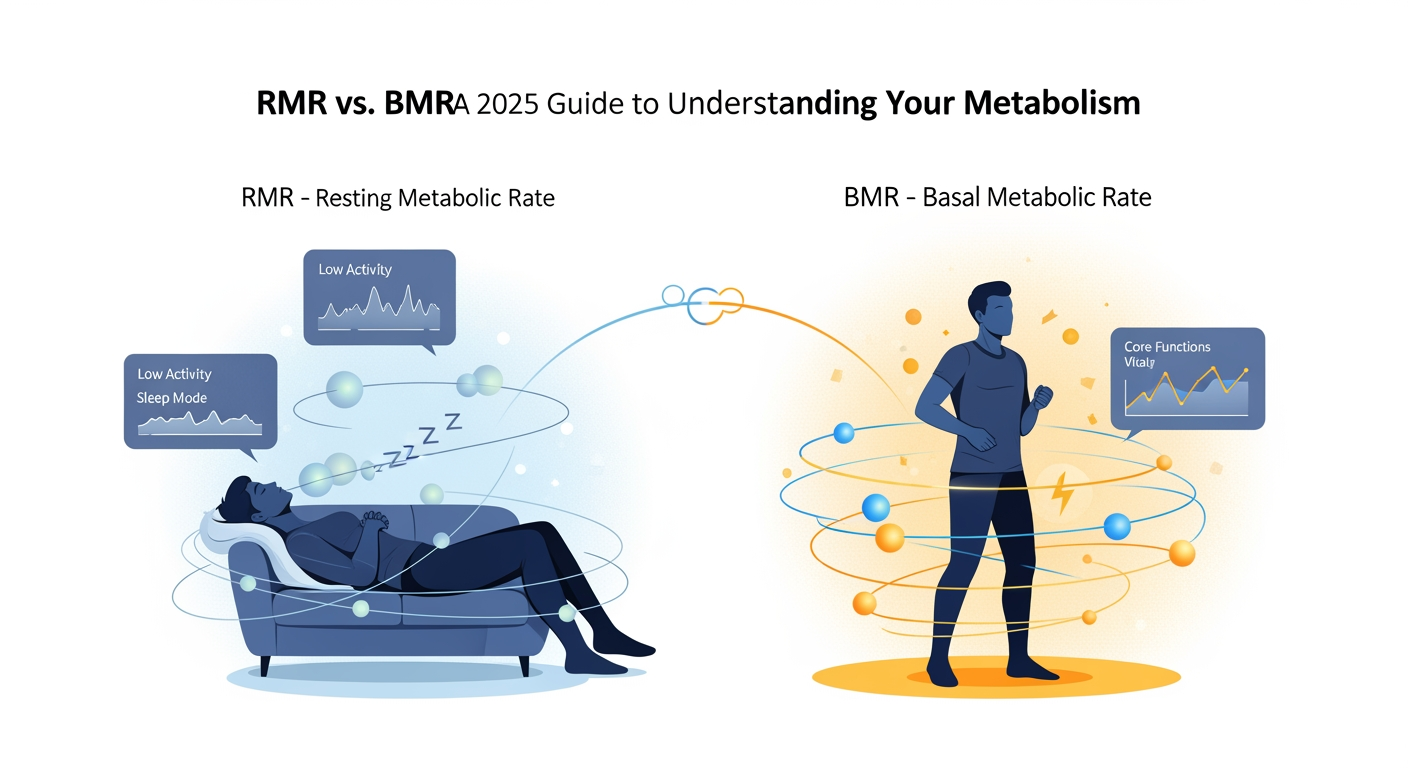
To truly grasp your metabolism, it's essential to start with the fundamentals. Basal Metabolic Rate (BMR) and Resting Metabolic Rate (RMR) are both measures of the energy your body expends at rest, but they aren't identical. Understanding these concepts can help you make informed decisions about diet, exercise, and lifestyle.
BMR refers to the minimum amount of energy your body needs to maintain vital functions while in a state of complete rest. This includes processes like breathing, circulating blood, and regulating body temperature. It's typically measured under strict conditions: after fasting for at least 12 hours, in a thermoneutral environment, and with no physical activity or emotional stress.
RMR, on the other hand, is a broader measure of the calories your body burns at rest but under less stringent conditions. It accounts for the energy used in a normal resting state, which might include slight movements or the effects of recent food intake. While BMR is more precise and lab-specific, RMR is often used in practical settings because it's easier to measure.
Both rates are influenced by factors like age, sex, body composition, and genetics. For instance, muscle mass plays a significant role since muscle tissue is metabolically active and requires more energy to maintain than fat tissue. As we age, BMR and RMR tend to decline due to loss of muscle mass and hormonal changes, which can make weight management more challenging.
To enhance understanding here, a simple comparison table would be ideal. It could list key attributes side by side, such as measurement conditions, accuracy, and typical uses, making the distinctions visually clear and easy to reference.
Section 2: Key Differences Between BMR and RMR
While BMR and RMR are closely related, their differences lie in measurement protocols, influencing how they're applied in health and fitness contexts. Recognizing these can prevent common misconceptions, like assuming they're interchangeable when calculating daily calorie needs.
The primary distinction is in the testing environment. BMR requires a post-absorptive state (no food for 12-14 hours) and complete physical and mental rest, often measured in a clinical setting with tools like indirect calorimetry. RMR, however, allows for measurements after a shorter fast (e.g., 3-4 hours) and in a more relaxed state, which might include the thermic effect of recent digestion.
In terms of energy expenditure, BMR typically accounts for about 60-75% of total daily calories burned, focusing solely on basal functions. RMR is slightly higher—often 10-20% more than BMR—because it includes minimal non-exercise activities and digestive processes. For example, if your BMR is 1,500 calories per day, your RMR might be around 1,650-1,800, depending on recent activity.
These differences matter for accuracy in applications like weight loss programs. Overestimating or underestimating can lead to ineffective plans. Studies show that RMR is more commonly used in fitness apps and clinics due to its practicality.
For visual aid, I suggest incorporating a diagram illustrating the components of total daily energy expenditure (TDEE), with BMR as the foundational layer and RMR overlapping it slightly to show the additional factors. This would help readers visualize how these rates fit into the bigger picture of metabolism.
Let's dive into the science behind this. Research indicates that BMR measurements under strict conditions provide a baseline for metabolic health assessments, highlighting why precision matters in clinical evaluations.
Section 3: The Biological Mechanisms Behind BMR and RMR
The mechanism is rooted in cellular and hormonal processes that regulate energy homeostasis. At the core, both BMR and RMR reflect the body's ATP (adenosine triphosphate) production, the energy currency of cells, primarily through mitochondrial activity in organs like the liver, brain, and muscles.
In biological terms, BMR is driven by obligatory energy demands. This involves cell signaling pathways where hormones like thyroid hormones (T3 and T4) bind to nuclear receptors, activating genes that enhance mitochondrial biogenesis and oxidative phosphorylation. For instance, triiodothyronine (T3) increases the expression of uncoupling proteins in mitochondria, which dissipate energy as heat, contributing to basal thermogenesis. This process ensures that even at rest, cells maintain ion gradients (e.g., sodium-potassium pumps) and protein synthesis, accounting for the majority of BMR.
RMR builds on this by incorporating variable factors. The thermic effect of food, for example, involves postprandial hormone action: insulin signals glucose uptake in cells, triggering glycolysis and increasing ATP demand. Additionally, sympathetic nervous system activation releases norepinephrine, which binds to beta-adrenergic receptors on cell membranes, stimulating cyclic AMP (cAMP) pathways that boost lipolysis and energy expenditure. This explains why RMR can fluctuate based on recent meals or light activity.
On a deeper level, both rates are modulated by the hypothalamic-pituitary-thyroid axis. The hypothalamus releases thyrotropin-releasing hormone (TRH), stimulating the pituitary to secrete thyroid-stimulating hormone (TSH), which in turn prompts the thyroid gland to produce T3 and T4. Disruptions in this axis, such as in hypothyroidism, can lower BMR by reducing mitochondrial efficiency.
Genetic factors also play a role; variations in genes like UCP1 influence brown adipose tissue activity, which generates heat via non-shivering thermogenesis. Environmental influences, like ambient temperature, activate TRPV1 receptors in sensory neurons, signaling the brain to adjust metabolic rate for homeostasis.
The mechanism underscores why lean body mass is crucial: skeletal muscle cells have high densities of mitochondria, where the electron transport chain efficiently converts nutrients into ATP. Fat tissue, conversely, has lower metabolic activity, relying more on passive storage.
To support these claims, evidence from authoritative sources shows that thyroid hormones regulate basal metabolic rate through mitochondrial uncoupling, emphasizing the hormonal control. Furthermore, studies on resting energy expenditure reveal the impact of body composition on RMR variations, providing insights into individual differences.
Section 4: Practical Implications and How to Measure Your Metabolic Rates
Understanding BMR and RMR isn't just academic—it's a tool for real-world health optimization. By knowing your rates, you can tailor nutrition and exercise to support weight goals, energy levels, and overall well-being.
Measuring BMR typically requires professional equipment like a metabolic cart in a lab, using formulas like the Harris-Benedict equation for estimates: For men, BMR = 88.362 + (13.397 × weight in kg) + (4.799 × height in cm) - (5.677 × age in years). RMR can be assessed similarly but often via handheld devices or apps that factor in recent activity.
Factors like diet affect these rates; for example, caloric restriction can lower BMR through adaptive thermogenesis, where the body conserves energy by reducing thyroid hormone output. Conversely, resistance training builds muscle, elevating both rates.
In 2025, advancements like wearable tech and AI-driven apps make tracking more accessible, though accuracy varies. Always consult professionals for personalized assessments.
The science reveals that interventions like exercise can increase RMR by enhancing mitochondrial function, offering evidence-based strategies for metabolic health.
As we wrap up, remember that metabolism is dynamic, and small changes can yield big results. At BeSlim.me, we've seen countless individuals thrive by applying these principles.
Actionable Takeaways
- Calculate Your Baseline: Use online tools or consult a specialist to estimate your BMR and RMR. This gives you a starting point for calorie planning—aim to consume 200-500 calories above your RMR for maintenance, adjusting based on activity.
- Boost Through Lifestyle: Incorporate strength training 2-3 times a week to increase muscle mass, which naturally elevates your metabolic rates. We've helped many clients see a 5-10% RMR increase this way.
- Monitor and Adjust: Track how factors like sleep and stress affect your rates. If you're feeling sluggish, prioritize 7-9 hours of sleep nightly, as poor rest can suppress thyroid function and lower BMR.
- Seek Personalized Advice: If weight loss stalls, get your RMR tested professionally. At BeSlim.me, we offer tailored programs that factor in these metrics for sustainable results.
By integrating this knowledge, you can take control of your metabolism and feel more energized every day. If you have questions, I'm here to help—let's make 2025 your healthiest year yet.
References
- BMR measurements under strict conditions provide a baseline for metabolic health assessments - ncbi.nlm.nih.gov
- Thyroid hormones regulate basal metabolic rate through mitochondrial uncoupling - mayoclinic.org
- Interventions like exercise can increase RMR by enhancing mitochondrial function - pubmed.ncbi.nlm.nih.gov


Medical Disclaimer
The content on this website is for informational and educational purposes only. It is not intended as medical advice and should not be relied upon as a substitute for consultations with qualified healthcare professionals who are familiar with your individual medical needs. Always seek the advice of your physician or other qualified healthcare provider with any questions you may have regarding a medical condition. Never disregard professional medical advice or delay in seeking it because of something you have read on this website.