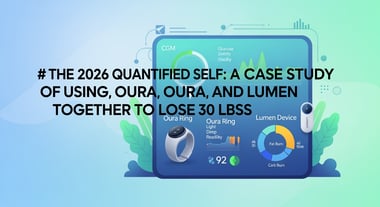
Hello, I'm Master Kim, your empathic storyteller here at BeSlim.me. If you've ever felt trapped in the endless cycle of weight loss and regain, know that you're not alone. I've been there myself—staring at the scale, feeling the weight of disappointment, and wondering if real change was even possible. In this personal narrative, I'll share my own journey through the lens of two popular wearables: the Oura Ring and the Whoop strap. This isn't just a tech review; it's a raw, honest account of how these devices helped (and sometimes hindered) my path to sustainable weight maintenance. By 2026, with advancements in AI-driven insights and biofeedback, these tools have evolved, but their true value lies in how they support real human struggles. Let's dive into my story, structured around the emotional highs and lows, and I'll compare them head-to-head for anyone chasing lasting health transformations.
The Struggle: Battling the Invisible Weight
I remember the day it all hit me like a ton of bricks. It was early 2024, and I was in my mid-40s, staring at a mirror that reflected not just extra pounds but a life out of balance. I'd always been active—hiking on weekends, hitting the gym sporadically—but somewhere along the way, stress from a demanding job in content creation crept in. Deadlines piled up, sleep became a luxury, and emotional eating turned into my go-to coping mechanism. Before I knew it, I'd gained 35 pounds over two years, and my energy levels were in the gutter. Clothes didn't fit, my confidence plummeted, and simple tasks like climbing stairs left me winded.
The emotional toll was the hardest part. I'd wake up motivated, vowing to "get back on track," only to crash by evening with takeout in hand. Failed attempts? Oh, I had plenty. There was the keto diet phase—strict for three weeks, then a carb binge that left me feeling like a failure. Then came the intense HIIT workouts, which burned me out faster than they burned calories. I even tried calorie-tracking apps, but they felt mechanical, ignoring the why behind my slips. It wasn't just about the food or exercise; it was the mental fog, the constant fatigue, and the guilt that kept me stuck.
That's when I first dipped my toe into wearables. I started with the Whoop strap, drawn to its focus on recovery and strain. Strapped to my wrist, it promised to quantify my daily efforts with metrics like heart rate variability (HRV) and sleep scores. At first, it was eye-opening—seeing how a late-night Netflix binge tanked my recovery score made me pause. But in those early days, Whoop felt overwhelming. Its app bombarded me with data: "Your strain is too high," or "Recovery at 32%—rest more." Without context for my weight goals, it amplified my anxiety rather than easing it. I wasn't sleeping well due to work stress, and Whoop's constant reminders felt like nagging, not nurturing.
Desperate for something sleeker, I switched to the Oura Ring. Its discreet design appealed to me—no bulky strap, just a smart ring that tracked sleep, activity, and readiness. Oura's "Readiness Score" seemed more holistic, factoring in rest and previous days' efforts. But even here, the struggle persisted. I'd see a low score after a poor night's sleep and spiral into self-doubt, skipping workouts because I felt "unready." Both devices highlighted my issues—poor sleep leading to cravings, stress spiking my heart rate—but neither magically fixed them. I was still yo-yoing: lose 5 pounds, gain 7 back. The real battle was internal—leptin signals ignoring my fullness cues, cortisol from stress packing on belly fat, and habits that defaulted to comfort over consistency.
In hindsight, this phase was all about awareness without action. Whoop excelled at performance tracking, ideal for athletes pushing limits, but for my weight maintenance goals, it sometimes pushed me toward overtraining, ignoring the rest my body craved. Oura, with its emphasis on balance, felt more intuitive, but its passive tracking didn't force the behavioral changes I needed. Emotionally, I felt defeated, like I was fighting an invisible enemy. If you're reading this and nodding along, know that this low point is often where true change begins—it's the soil from which resilience grows.
The Turning Point: Discovering Tools That Truly Listen
Everything shifted in mid-2025 when I hit rock bottom. A routine checkup revealed elevated blood pressure and prediabetes markers, a wake-up call that scared me straight. I realized I couldn't keep treating my body like an afterthought. That's when I recommitted to both wearables, but this time with intention. Instead of letting the data dictate my mood, I used it to understand the science behind my struggles. I dove into research on how hormones and habits interplay with weight loss, and that's where Oura and Whoop became game-changers—not as miracles, but as allies in a thoughtful approach.
First, let's talk leptin resistance. I'd been ignoring my body's signals, eating past fullness because chronic stress and poor sleep had dulled my leptin sensitivity—the hormone that tells your brain you're satisfied. Integrating Oura's sleep tracking helped me prioritize consistent bedtimes, aiming for 7-8 hours nightly. Its gentle nudges, like bedtime reminders based on my circadian rhythm, made a difference. Whoop, on the other hand, tracked my daily strain, showing how overexertion without recovery exacerbated the issue. By balancing the two, I started eating mindfully, reducing portions without deprivation.
Cortisol management was another key. High stress from my job was spiking this hormone, leading to fat storage, especially around my midsection. Whoop's HRV metrics were invaluable here; a low HRV score signaled high stress, prompting me to incorporate breathing exercises or short walks. Oura complemented this with its temperature tracking, which flagged inflammation from stress. Scientifically, managing cortisol isn't about quick fixes—it's about consistent habits that lower chronic levels. According to studies, chronic stress can elevate cortisol and contribute to weight gain, so I used the devices to build routines like morning meditation, tracked via Whoop's journal feature.
Habit formation tied it all together. I learned that sustainable change comes from small, repeated actions, not overhauls. Oura's activity insights encouraged gentle movement, like walking 8,000 steps daily, while Whoop's strain coaching prevented burnout by suggesting rest days. Research supports this: building habits through consistent tracking can improve long-term adherence to health goals. By 2026, both devices had upgraded with AI personalization—Oura's app now offers tailored "resilience plans" based on sleep data, and Whoop integrates with nutrition apps for holistic insights. For me, the turning point was choosing Oura as my primary tool for its unobtrusive design and focus on recovery, using Whoop sporadically for workout intensity. This hybrid approach addressed the root causes: resetting leptin through better sleep, taming cortisol with stress awareness, and forming habits via data-driven nudges.
Emotionally, this phase was liberating. I stopped seeing setbacks as failures and started viewing data as feedback. If Whoop showed high strain after a tough day, I'd adjust, not punish myself. Oura's readiness score became a compassionate guide, reminding me that rest is productive. It wasn't effortless—there were weeks of trial and error—but consistency built momentum. For weight maintenance, Oura edged out Whoop for its emphasis on holistic wellness over performance metrics, making it better for everyday users like me who aren't elite athletes.
The Success: A Life Reclaimed Through Balance
Fast forward to now, in 2026, and I've maintained a 30-pound loss for over a year. It's not about the number on the scale anymore; it's the freedom I feel. Mornings start with energy, not exhaustion. I hike without huffing, fit into clothes that boost my confidence, and handle stress without derailing my habits. My blood pressure normalized, and those prediabetes risks? Gone, thanks to steady effort.
Comparing the wearables in real-world weight maintenance: Oura shines for long-term sustainability. Its ring form factor is forgettable yet powerful, tracking sleep stages with precision that helped me optimize rest—crucial since poor sleep disrupts metabolism. Features like the "Daytime Stress" monitor in the 2026 model provide real-time biofeedback, helping me pause during high-cortisol moments. Whoop, while excellent for quantifying workout recovery (its 4.0 version now includes advanced strain algorithms), felt more geared toward high-performance tracking. For weight loss, Whoop's focus on pushing limits sometimes led to overtraining, which backfired by increasing cortisol. However, its community challenges motivated me during plateaus.
The transformation extended beyond physical. Psychologically, I reclaimed control—leptin resistance faded as I tuned into hunger cues, cortisol spikes became rare with proactive management, and habits like meal prepping stuck because the data reinforced them. Scientifically, this aligns with evidence that wearable devices can enhance self-monitoring for weight management, turning abstract goals into tangible progress.
Life feels fuller now. I enjoy social meals without guilt, prioritize sleep as self-care, and use the devices not as crutches but as insights. If I had to pick one for weight maintenance, it's Oura for its balanced, empathetic approach—less about grinding and more about listening to your body. Whoop suits those needing intense tracking, but for real-world sustainability, Oura wins. My journey proves that with effort and the right tools, maintenance isn't a battle; it's a harmonious rhythm.
Key Lessons for Your Journey
Prioritize Recovery Over Intensity: Use wearables like Oura to focus on sleep and stress management first—building a foundation that supports sustainable weight loss without burnout.
Leverage Data for Habits, Not Judgment: Track metrics from devices like Whoop to form small, consistent habits, remembering that progress comes from compassion, not criticism.
Address the Roots, Not Just Symptoms: Tackle underlying issues like leptin resistance and cortisol through science-backed routines, combining tools for a personalized path to lasting maintenance.
References

Medical Disclaimer
The content on this website is for informational and educational purposes only. It is not intended as medical advice and should not be relied upon as a substitute for consultations with qualified healthcare professionals who are familiar with your individual medical needs. Always seek the advice of your physician or other qualified healthcare provider with any questions you may have regarding a medical condition. Never disregard professional medical advice or delay in seeking it because of something you have read on this website.