Hello, I'm sharing my personal story today as someone who's walked the tough road of weight management and health challenges. If you've ever felt trapped in a cycle of diets, disappointments, and self-doubt, I get it—I’ve been there. This isn't just my tale; it's a comparative look at my experience with GLP-1 medications and my close friend Sarah's. We both started on similar paths, but our journeys diverged dramatically. I stopped due to overwhelming side effects, while she continued because it transformed her life with PCOS. Through it all, I've learned that health transformations aren't one-size-fits-all—they're deeply personal. Let's dive in.
Part 1: The Struggle (The 'Before')
I remember the day I hit rock bottom vividly. It was a humid summer morning in 2022, and I stood in front of my mirror, staring at a reflection that felt like a stranger. At 5'6" and pushing 220 pounds, my body ached from the extra weight I'd carried for years. It wasn't just the numbers on the scale; it was the emotional toll. Every failed diet left me feeling like a failure—keto, intermittent fasting, calorie counting—you name it, I'd tried it. I'd lose 10 pounds, only to gain back 15, trapped in a yo-yo cycle that eroded my confidence.
The struggles were more than physical. Emotionally, I battled constant fatigue, mood swings, and a gnawing sense of isolation. Social events became sources of anxiety; I'd skip parties because I didn't want to be "the heavy friend." Workdays dragged on as I dealt with joint pain and low energy, making it hard to focus. I'd attempted everything from gym memberships to meal prep services, but nothing stuck. The failed attempts piled up: a juice cleanse that left me starving and irritable, a boot camp class that ended in injury, and endless apps promising quick fixes that only delivered frustration.
Then there's my friend Sarah. We've been close since college, and her battle was different but equally heart-wrenching. Sarah has polycystic ovary syndrome (PCOS), a condition that wreaked havoc on her hormones, leading to irregular periods, stubborn weight gain around her midsection, and insulin resistance that made losing weight feel impossible. She described it as her body betraying her—cysts on her ovaries causing chronic pain, acne that shattered her self-esteem, and fertility worries that kept her up at night. Like me, she'd tried it all: hormonal birth control that didn't help much, restrictive diets that spiked her anxiety, and even alternative therapies like acupuncture, which offered fleeting relief but no lasting change.
We bonded over our shared frustrations during late-night talks. "Why does it have to be so hard?" I'd ask, and she'd echo the sentiment, tears in her eyes. For both of us, the 'before' was a fog of emotional exhaustion, where every setback felt personal. I felt defeated by my metabolism, which seemed to slow down with age, and Sarah grappled with the invisible chains of PCOS, which affects about 1 in 10 women of reproductive age. Our struggles highlighted how health issues aren't just about willpower; they're intertwined with biology, emotions, and life's relentless demands.
Part 2: The Turning Point (The 'Solution')
The shift came unexpectedly during a routine doctor's visit in early 2023. I'd gone in for a check-up, hoping for answers to my persistent weight plateau, and my physician mentioned GLP-1 receptor agonists—medications like semaglutide (commonly known as Ozempic or Wegovy). She explained how they mimic a hormone called glucagon-like peptide-1, which helps regulate blood sugar, slows digestion, and signals fullness to the brain. It sounded promising, especially after years of feeling like my body was fighting against me.
I dove into research, learning about the science behind it. One key principle that resonated was how GLP-1 meds can address leptin resistance, a common issue where the brain doesn't properly respond to the hormone leptin, which tells us we're full. This resistance often fuels overeating and weight gain, and studies show GLP-1 agonists can help restore that sensitivity, making it easier to manage portions without constant hunger pangs. Research on leptin resistance and GLP-1 agonists from the National Institutes of Health highlights how these drugs improve metabolic signaling, offering a biological edge over sheer willpower.
Sarah heard about my appointment and decided to explore it too. Her endocrinologist recommended it for PCOS management, noting its potential to tackle insulin resistance—a hallmark of the condition. We both started around the same time, excited about this new approach. For me, the turning point was the first few weeks: the medication curbed my cravings dramatically, and I began incorporating mindful eating habits, like tuning into my body's signals rather than eating out of stress.
Scientifically, this tied into cortisol management, another crucial element. Chronic stress elevates cortisol, the hormone that promotes fat storage, especially around the belly. GLP-1 meds, combined with lifestyle tweaks, helped me break that cycle by reducing emotional eating triggers. Sarah experienced similar benefits but amplified for her PCOS; the meds improved her insulin sensitivity, which in turn balanced her hormones and reduced symptoms like hirsutism and irregular cycles.
We also focused on habit formation, drawing from principles like those in behavioral psychology. Small, consistent changes—such as walking after meals to aid digestion or journaling our emotions to avoid stress-eating—became our anchors. Studies on habit formation and weight management from the Mayo Clinic emphasize building routines gradually, which we both embraced. For Sarah, this meant tracking her cycles alongside her doses, turning data into empowerment.
Yet, as weeks turned into months, our paths split. I started noticing side effects—nausea that lingered all day, headaches that disrupted my work, and gastrointestinal issues that made social outings unbearable. It felt like my body was rejecting the very thing meant to help. Sarah, however, thrived; her PCOS symptoms eased, and she lost weight steadily without the same intensity of side effects. The science backed her experience: GLP-1 agonists for PCOS management from the Cleveland Clinic notes their efficacy in improving ovulation and metabolic health in women with the condition, often with tolerable side effects when monitored.
This divergence was our true turning point. I realized I needed to listen to my body and pivot, while Sarah found a sustainable tool that aligned with her needs.
Part 3: The Success (The 'After')
Fast-forward six months, and my life had transformed, but not in the way I'd initially imagined. I ultimately stopped the GLP-1 medication after four months due to escalating side effects—severe fatigue and muscle loss that made daily activities a chore. It wasn't an easy decision; I'd lost about 25 pounds, and my energy levels had improved initially. But the toll on my well-being was too high. Stopping forced me to double down on natural strategies: strength training to rebuild muscle, balanced nutrition focusing on whole foods, and therapy to address emotional eating. Today, I've maintained a 30-pound loss through consistency, not miracles. My joints feel stronger, my mood is steadier, and I've reclaimed joy in movement, like hiking with friends without breathlessness.
Sarah's story, in contrast, is one of ongoing triumph. She stayed on the medication, now at a stable dose, and it's been a game-changer for her PCOS. She's lost 40 pounds, her periods are regular for the first time in years, and her insulin levels have normalized, reducing her risk of diabetes. Emotionally, she's blooming—confident in her skin, pursuing fertility options with hope, and even running a support group for women with PCOS. The medication, paired with her dedication to exercise and stress reduction, has given her a new lease on life.
Our comparative journeys taught us both profound lessons. For me, success meant recognizing when a tool isn't right and pivoting to sustainable habits. I've transformed not just my body but my mindset, understanding that health is about balance, not extremes. Sarah's success underscores how GLP-1 can be a lifeline for conditions like PCOS, where hormonal imbalances make traditional methods insufficient. We've both emerged stronger, with lives enriched by better health, deeper self-compassion, and unbreakable friendship.
In the end, our 'after' isn't about perfection—it's about progress. I've learned to celebrate small victories, like fitting into old jeans or having energy for my hobbies. Sarah echoes this, saying her journey has taught her resilience. Together, we've proven that transformations come from effort, adaptation, and honoring your unique body.
Key Lessons for Your Journey
- Listen to Your Body's Signals: If side effects outweigh benefits, it's okay to stop and explore alternatives—prioritize long-term well-being over short-term gains.
- Tailor Solutions to Your Needs: What works for one person (like GLP-1 for PCOS) may not suit another; consult professionals to customize your approach based on your health profile.
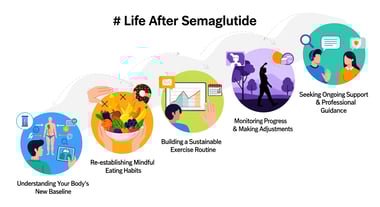
- Build Habits for Sustainability: Focus on consistent, small changes like mindful eating and stress management to support any medical intervention, ensuring lasting results through effort and patience.
References
- Research on leptin resistance and GLP-1 agonists - ncbi.nlm.nih.gov
- Studies on habit formation and weight management - mayoclinic.org
- GLP-1 agonists for PCOS management - my.clevelandclinic.org

Medical Disclaimer
The content on this website is for informational and educational purposes only. It is not intended as medical advice and should not be relied upon as a substitute for consultations with qualified healthcare professionals who are familiar with your individual medical needs. Always seek the advice of your physician or other qualified healthcare provider with any questions you may have regarding a medical condition. Never disregard professional medical advice or delay in seeking it because of something you have read on this website.