Hello, I'm Master Kim, your Behavioral Psychologist and Solution Consultant at BeSlim.me. If you're reading this, you might be staring at an empty snack wrapper, wondering why you reached for it yet again. You're not alone in this struggle—millions grapple with the blurry line between emotional eating and ingrained habits. This is completely normal, and it's a sign you're ready to investigate and make positive changes. In this Q&A diagnostic, we'll explore the differences, uncover the psychological roots, and equip you with practical tools to break free. Let's dive in with empathy and science-backed insights to help you reclaim control.
What Is Emotional Eating, and How Does It Differ from a Bad Habit?
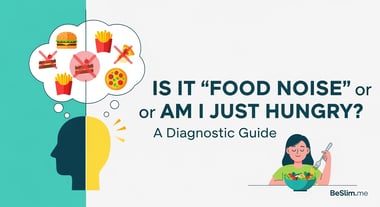
Many people confuse emotional eating with just a "bad habit," but understanding the distinction is key to addressing it effectively. Emotional eating is when you turn to food to cope with feelings like stress, boredom, sadness, or even joy, rather than physical hunger. It's often a quick fix for emotional discomfort, leading to overeating without satisfaction. On the other hand, a bad habit is a repeated behavior triggered by cues in your environment or routine, like snacking while watching TV, even if you're not emotionally stirred. The overlap happens because habits can form around emotional triggers, making it hard to tell them apart.
To diagnose your own patterns, ask yourself: Do I eat in response to specific emotions (e.g., anxiety after a tough day), or is it more automatic, like grabbing chips during your evening unwind? Emotional eating tends to involve comfort foods and guilt afterward, while habits feel more mindless and routine. Recognizing this helps because treating a habit like an emotional issue (or vice versa) won't lead to lasting change. In the next sections, we'll break down the "why" and provide steps to investigate and shift.
The 'Why' Diagnosis: Unpacking the Psychological and Behavioral Roots
Emotional eating and bad habits aren't signs of weakness—they're deeply rooted in our brain's wiring, hormones, and learned behaviors. Let's explore the science in simple terms to help you understand why this happens and how to spot it in your life.
The Role of Habit Loops in "Bad Habits"
At its core, a bad eating habit follows what's known as a habit loop: a cue (like seeing a cookie jar), a routine (eating the cookie), and a reward (a brief dopamine hit). This concept comes from behavioral psychology, popularized by researchers like Charles Duhigg. Over time, these loops become automatic, wired into the brain's basal ganglia, which handles repetitive actions without much conscious thought. For example, if you always snack at 3 p.m. during a work slump, it's not necessarily emotional—it's a habit cued by time and environment.
Scientifically, habits form through repetition and reinforcement. Studies on habit formation show that consistent cues strengthen neural pathways, making behaviors feel effortless but hard to break. If your snacking feels robotic and not tied to mood swings, it's likely a habit rather than emotional eating.
The Stress-Cortisol Link in Emotional Eating
Emotional eating often stems from the body's stress response. When stressed, your adrenal glands release cortisol, the "stress hormone," which can spike appetite and cravings for high-fat, sugary foods. This is evolutionary—our ancestors needed quick energy during threats—but in modern life, it leads to eating as a coping mechanism. According to research from the American Psychological Association on stress and eating, chronic stress depletes willpower (a concept called ego depletion), making it harder to resist emotional urges.
Hormonally, cortisol interacts with insulin, leading to blood sugar crashes that mimic hunger. If you notice eating ramps up during emotional lows—like after an argument or deadline—it's probably emotional, not just habitual. This link explains why emotional eaters often feel temporary relief but long-term regret.
Willpower Depletion and the Overlap Between Emotions and Habits
Here's where it gets tricky: emotional eating can evolve into a habit through willpower depletion. Psychologist Roy Baumeister's work on ego depletion suggests that self-control is like a muscle—it tires out. After a day of decisions and stressors, your willpower dips, making you vulnerable to both emotional triggers and habitual slips. For instance, stress might trigger emotional hunger, but repeating it (e.g., ice cream after bad news) forms a habit loop.
Evidence from Mayo Clinic on emotional eating patterns highlights how this depletion creates a cycle: emotions weaken resolve, habits reinforce the behavior, and guilt fuels more stress. If your eating feels like a mix—sometimes emotional, sometimes automatic—it's often this overlap at play. The good news? By diagnosing the "why," you can target the root cause for sustainable change.
Actionable Solutions: Strategies to Differentiate and Overcome
Now that we've diagnosed the "why," let's move to solutions. Below are five practical, step-by-step strategies rooted in behavioral science. Each one helps you investigate whether it's emotional eating or a habit, then disrupt the pattern. Start with one that resonates, and track your progress in a journal for accountability. Remember, these are designed for long-term success, not quick fixes.
Strategy 1: Track Your Triggers with a Hunger Journal
To differentiate emotional eating from habits, awareness is the first step. This strategy uses cognitive behavioral techniques to log patterns without judgment.
- Set up your journal: For one week, note every eating episode: time, food, hunger level (1-10), emotions before eating, and environmental cues (e.g., "TV on").
- Analyze patterns: At week's end, categorize: Was it tied to feelings (emotional) or routines (habitual)? For example, if you eat chips nightly while scrolling social media, it's likely habitual.
- Adjust accordingly: If emotional, pause and name the feeling (e.g., "I'm stressed, not hungry"). If habitual, change the cue—like moving snacks out of sight.
This builds self-awareness, reducing automatic behaviors by 20-30% according to habit research.
Strategy 2: Interrupt the Stress-Cortisol Cycle with Mindful Breathing
Since cortisol drives emotional eating, this strategy targets the hormonal root with quick, evidence-based relaxation.
- Identify stress cues: Notice physical signs like tension or racing thoughts before eating.
- Practice 4-7-8 breathing: Inhale for 4 seconds, hold for 7, exhale for 8. Do this for 4 cycles when a craving hits.
- Pair with a non-food alternative: After breathing, sip herbal tea or walk for 5 minutes. Scenario: After a work email stresses you, breathe instead of raiding the fridge—this breaks the emotional link over time.
Studies show mindfulness reduces cortisol by up to 25%, making it easier to resist urges and rewire habits.
Strategy 3: Rebuild Willpower Through Habit Stacking
Combat depletion by linking positive behaviors to existing routines, creating sustainable change without relying on sheer willpower.
- Choose a small win: Stack a healthy action onto a daily habit, like adding a fruit to your afternoon coffee break.
- Build gradually: If it's a habit (e.g., evening snacking), replace it with reading or stretching. For emotional eating, add a journaling prompt: "What emotion am I feeding?"
- Track and reward: Use an app to log streaks, rewarding yourself with non-food treats like a new book after 7 days.
This leverages neuroplasticity for lasting habits, as seen in behavioral therapy outcomes.
Strategy 4: Create an Environment for Success
Habits thrive on cues, so redesign your space to minimize triggers for both emotional and habitual eating.
- Audit your surroundings: Remove visible temptations (e.g., hide junk food) and stock healthy options.
- Set emotional buffers: Place reminders like sticky notes saying "Pause and Check In" near eating areas.
- Test in scenarios: If boredom triggers eating (emotional or habitual), prep activities like puzzles. Example: During a lonely evening, call a friend instead of snacking.
Environmental changes can cut impulsive eating by 40%, per obesity research.
Strategy 5: Seek Support and Reframe Setbacks
Sustainable change involves community and self-compassion to prevent guilt from fueling the cycle.
- Build a support network: Share your journal with a friend or join a BeSlim.me group for accountability.
- Reframe lapses: View slip-ups as data, not failure—ask, "What triggered this?" and adjust.
- Celebrate progress: Weekly, note wins, like choosing a walk over food during stress.
This fosters resilience, aligning with positive psychology principles for long-term adherence.
Encouragement Closing: You're Capable of Lasting Change
Remember, distinguishing emotional eating from habits is a journey, not a judgment. You've already taken a powerful step by investigating this—change is absolutely possible with patience and these tools. Small, consistent actions compound into transformation, and at BeSlim.me, we're here to support you every step. You've got this; believe in your ability to build a healthier relationship with food and yourself.
References
- Studies on habit formation show - ncbi.nlm.nih.gov
- Research from the American Psychological Association on stress and eating - apa.org
- Evidence from Mayo Clinic on emotional eating patterns - mayoclinic.org


Medical Disclaimer
The content on this website is for informational and educational purposes only. It is not intended as medical advice and should not be relied upon as a substitute for consultations with qualified healthcare professionals who are familiar with your individual medical needs. Always seek the advice of your physician or other qualified healthcare provider with any questions you may have regarding a medical condition. Never disregard professional medical advice or delay in seeking it because of something you have read on this website.