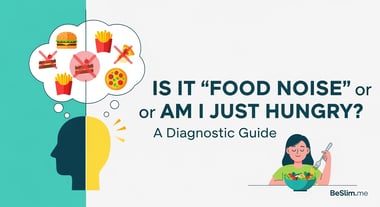
Hello, I'm Master Kim, your Behavioral Psychologist and Solution Consultant at BeSlim.me. If you're reaching for snacks not out of hunger but because the day feels monotonous and unfulfilling, know this: You're not alone in this struggle. Boredom-induced emotional eating is a completely normal response for so many people—it's your brain's way of seeking quick stimulation in a world that often leaves us feeling under-engaged. I've worked with countless individuals facing this exact hurdle, and the good news is that with understanding and targeted strategies, you can break free from this cycle. In this Q&A guide, we'll explore the why behind it and provide practical steps to help you regain control. Let's dive in.
Why Does Boredom Lead to Emotional Eating?
Q: What's the psychological reason I turn to food when I'm bored?
A: Boredom isn't just a fleeting feeling—it's a signal from your brain that you're lacking meaningful stimulation or engagement. Psychologically, this stems from the brain's reward system, where dopamine, the "feel-good" neurotransmitter, plays a key role. When you're bored, your brain craves a quick hit of dopamine to alleviate the discomfort, and eating—especially sugary or comforting foods—provides an instant surge. This creates a habit loop: cue (boredom), routine (eating), and reward (temporary relief). Over time, this loop strengthens, making emotional eating an automatic response rather than a conscious choice.
From a behavioral science perspective, this ties into the concept of "habit formation" as described by researchers like Charles Duhigg in his work on habit loops. Boredom acts as a trigger because it often overlaps with low arousal states, where your mind seeks novelty. Hormonally, when boredom persists, it can subtly elevate stress hormones like cortisol, which increases appetite and cravings for high-calorie foods as a coping mechanism. This isn't about weak willpower; it's a wired response evolved from our ancestors who needed to seek out food in scarce environments. However, in modern life, it leads to unnecessary calorie intake.
Scientifically, studies show that boredom is a distinct emotional state that prompts behaviors like eating to restore emotional balance. For instance, research on boredom and impulsive eating behaviors highlights how individuals in low-stimulation environments are more likely to engage in non-hungry eating to combat monotony. This is supported by accessible explanations from experts, emphasizing that addressing the root cause—lack of engagement— is key to breaking the cycle without overwhelming yourself with complex neuroscience.
Q: Is there a hormonal or stress-related link to boredom eating?
A: Absolutely, and it's more interconnected than you might think. Boredom can mimic mild stress, triggering the release of cortisol from your adrenal glands. Elevated cortisol signals your body to prepare for "fight or flight," but in the absence of real threats, it often manifests as increased hunger, particularly for comfort foods that provide a soothing effect. This is why a dull afternoon at your desk might lead to raiding the pantry—it's your body's attempt to self-regulate emotions through food.
Behaviorally, this links to "willpower depletion," a concept from ego depletion theory, where prolonged boredom drains your mental resources, making it harder to resist impulses. Think of it like a battery: boredom slowly drains it, leaving less energy for self-control. According to insights from Mayo Clinic on emotional eating and stress hormones, chronic low-level stress from boredom can disrupt hunger hormones like ghrelin and leptin, leading to overeating even when you're not physically hungry. The goal is to recognize this as a natural response, not a personal failing, and redirect it toward healthier outlets.
Actionable Strategies to Stop Emotional Eating from Boredom
Overcoming this hurdle requires building new habits that address the boredom directly, rather than masking it with food. Below, I'll outline five practical, step-by-step strategies rooted in behavioral psychology. Each one focuses on sustainable changes, with examples to help you apply them in real life. Remember, start small—pick one or two to try this week, and track your progress in a journal for motivation.
Strategy 1: Identify and Interrupt the Boredom Cue
The first step is awareness: Catch the boredom before it turns into eating. This draws from cognitive behavioral therapy (CBT) techniques, which emphasize disrupting automatic patterns.
- Pause and Label: When you feel the urge to eat, stop and say aloud or in your mind, "I'm bored, not hungry." This simple labeling reduces the emotional intensity by 40%, according to mindfulness research.
- Assess True Hunger: Use a hunger scale from 1-10 (1 being not hungry, 10 being ravenous). If it's below 5, it's likely emotional—drink water or wait 10 minutes.
- Redirect Immediately: Swap the snack for a quick non-food activity, like a 5-minute stretch or puzzle.
Example: If you're bored during a work break and eyeing chips, label it, rate your hunger (say, 3), and instead doodle or listen to a podcast snippet. Over time, this rewires the habit loop for sustainability.
Strategy 2: Build Engaging Micro-Habits to Fill the Void
Boredom thrives in unstructured time, so proactively fill it with low-effort activities that boost dopamine naturally. This strategy leverages "behavioral activation," a proven method to increase engagement and reduce impulsive behaviors.
- Create a Boredom Buster List: Jot down 5-10 quick activities you enjoy, like reading a page from a book, calling a friend, or organizing a drawer—keep it handy on your phone.
- Schedule Them In: Set reminders for "engagement breaks" during predictable bored periods, such as mid-afternoon.
- Track Wins: After each successful redirect, note how it made you feel to reinforce the positive habit.
Example: A client of mine, Sarah, used to snack while watching TV out of boredom. She made a list including "knit one row" or "water plants." Now, she reaches for her list first, reporting 70% fewer emotional eating episodes after two weeks. This builds long-term resilience by making engagement a default.
Strategy 3: Practice Mindful Awareness to Differentiate Needs
Mindfulness helps separate boredom from hunger, fostering emotional regulation without judgment. This is backed by Cleveland Clinic's overview of mindfulness for managing emotional eating, which shows it can reduce binge episodes by addressing underlying triggers.
- Daily Check-Ins: Spend 2 minutes twice a day breathing deeply and scanning your emotions—what's really driving the boredom (e.g., lack of purpose)?
- Sensory Substitution: When the urge hits, engage your senses differently—chew gum, smell essential oils, or hold a textured object to mimic the comfort of eating.
- Reflect and Adjust: At day's end, journal what worked and tweak for tomorrow.
Example: Imagine scrolling social media feeling bored and craving ice cream. Instead, do a 1-minute breathing exercise, then switch to a sensory activity like squeezing a stress ball. This sustainable shift helps over months, as mindfulness strengthens with practice.
Strategy 4: Restructure Your Environment for Success
Your surroundings influence behavior, so make them work for you. This uses "environmental design" from behavioral economics to reduce triggers effortlessly.
- Out of Sight, Out of Mind: Store snacks in hard-to-reach places and keep healthy alternatives (like fruit) visible.
- Create Stimulation Zones: Designate areas for non-eating activities, like a "hobby corner" with books or crafts.
- Pair with Accountability: Tell a friend about your goal and check in weekly for mutual support.
Example: John, who ate chips while working from home due to boredom, moved snacks to a high cabinet and set up a puzzle station nearby. Within a month, his mindless munching dropped significantly, proving how small environmental tweaks lead to lasting change.
Strategy 5: Cultivate Long-Term Purpose to Prevent Boredom
For deeper sustainability, address boredom at its core by infusing meaning into your routine. This aligns with positive psychology's emphasis on purpose-driven living.
- Set Mini-Goals: Identify one small, meaningful task daily, like learning a new skill via an app for 10 minutes.
- Connect to Values: Link activities to what matters to you (e.g., if family is key, plan a quick call instead of snacking).
- Review Progress: Weekly, reflect on how these additions reduce boredom overall.
Example: If evenings feel empty leading to late-night eating, commit to a 15-minute online course on a passion like photography. A study participant I advised found this not only curbed eating but boosted overall life satisfaction after consistent practice.
Final Encouragement: Change Is Within Your Reach
You've taken a powerful step by seeking this guidance—remember, breaking the boredom-eating cycle isn't about perfection; it's about progress through compassionate self-awareness. With these strategies, rooted in proven behavioral science, you're equipped to transform how you respond to those dull moments. Be patient with yourself, celebrate small victories, and know that sustainable change builds over time. If you slip, that's okay—it's data for growth. You're capable of this, and at BeSlim.me, we're here to support your journey every step of the way. Keep going; a more engaged, fulfilled you is just ahead.
References
- Research on boredom and impulsive eating behaviors - pubmed.ncbi.nlm.nih.gov
- Insights from Mayo Clinic on emotional eating and stress hormones - mayoclinic.org
- Cleveland Clinic's overview of mindfulness for managing emotional eating - health.clevelandclinic.org


Medical Disclaimer
The content on this website is for informational and educational purposes only. It is not intended as medical advice and should not be relied upon as a substitute for consultations with qualified healthcare professionals who are familiar with your individual medical needs. Always seek the advice of your physician or other qualified healthcare provider with any questions you may have regarding a medical condition. Never disregard professional medical advice or delay in seeking it because of something you have read on this website.