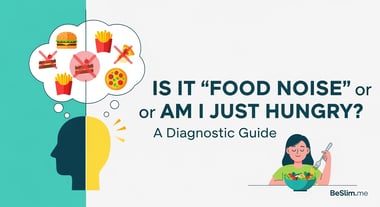
Hello, I'm Master Kim, your Behavioral Psychologist and Solution Consultant at BeSlim.me. If you're reading this, you might be caught in the frustrating cycle of turning to food for comfort during stressful or emotional times. You're not alone in this struggle—millions of people experience emotional eating, and it's a completely normal response to life's ups and downs. It's not about lacking willpower; it's often a deeply ingrained habit shaped by our brains and bodies. The good news is that with understanding and practical steps rooted in behavioral science, you can break free. In this Q&A guide, we'll explore common questions about emotional eating, diagnose the 'why' behind it, and provide a clear 5-step plan to help you regain control. Let's dive in with empathy and actionable insights.
Why Do We Emotionally Eat? Understanding the Root Causes
Emotional eating isn't just about food—it's a behavioral response to unmet emotional needs. Many people wonder, "Why do I reach for snacks when I'm stressed or sad?" Let's break it down with some psychological and scientific insights, explained in simple terms.
At its core, emotional eating stems from habit loops, a concept from behavioral psychology where cues (like stress) trigger automatic responses (eating) that provide temporary rewards (comfort). According to research, this is linked to the brain's reward system, where food activates dopamine pathways, creating a feel-good rush that distracts from negative emotions. For instance, chronic stress elevates cortisol, the "stress hormone," which can increase appetite and cravings for high-calorie foods as a survival mechanism. This cortisol-appetite connection is well-documented; studies on stress and eating behaviors show that elevated cortisol levels can lead to overeating in response to emotional triggers, essentially wiring your brain to seek food as a quick fix.
Hormonally, it's tied to the body's fight-or-flight response. When you're anxious, your body prepares for action by ramping up energy needs, but in modern life, we often "fight" stress with readily available treats instead of physical activity. Psychologically, this can trace back to childhood associations—think of being comforted with sweets after a bad day—which form neural pathways that persist into adulthood. Willpower depletion plays a role too; after a long day of decision-making, your prefrontal cortex (the brain's "control center") fatigues, making impulsive eating more likely. As explained in research from the National Institutes of Health on ego depletion and self-control, this exhaustion reduces your ability to resist emotional urges.
In short, emotional eating is your brain's adaptive but unhelpful way of coping. It's not a character flaw—it's a mix of biology, psychology, and learned behaviors. Recognizing this can reduce self-blame and empower change. Now, let's address some frequent questions before moving to solutions.
Q: Is emotional eating the same as binge eating?
No, but they can overlap. Emotional eating is using food to soothe emotions without physical hunger, while binge eating involves consuming large amounts uncontrollably, often with guilt. Both can be addressed with similar behavioral strategies.
Q: Can emotional eating lead to weight gain?
Yes, it often does because it involves calorie-dense foods. However, the focus here is on breaking the cycle for overall well-being, not just weight.
Q: How do I know if my eating is emotional?
Ask yourself: Am I eating because I'm bored, lonely, or upset, rather than hungry? Physical hunger builds gradually; emotional hunger hits suddenly and craves specific comfort foods.
5 Steps to Stop Emotional Eating: Actionable Strategies
Ready to take control? Based on behavioral science principles like cognitive behavioral therapy (CBT) and habit formation theories, here's a 5-step guide. Each step includes practical, step-by-step actions you can start today. We'll use real-life scenarios to illustrate, focusing on sustainable changes rather than quick fixes. Remember, progress comes from consistency, not perfection.
Step 1: Identify Your Triggers with Mindful Awareness
The first step is awareness—without it, you can't interrupt the habit loop. Scientifically, mindfulness practices help by activating the brain's observation centers, reducing automatic responses.
- Track your patterns: For one week, keep a simple journal. Note what you're feeling (e.g., stressed after work), the situation, and what you eat. Use an app or notebook—aim for 3 entries per day.
- Pause and reflect: Before eating, ask: "Am I physically hungry?" Rate your hunger on a scale of 1-10. If it's below 5 and tied to an emotion, that's your cue.
- Scenario example: Sarah notices she snacks on chips every evening after arguing with her partner. By journaling, she identifies loneliness as the trigger and replaces it with a quick call to a friend.
This step builds self-awareness, supported by evidence from Mayo Clinic on mindfulness for emotional eating, which shows it can reduce impulsive behaviors by 20-30%.
Step 2: Disrupt the Habit Loop with Alternative Coping Mechanisms
Once triggers are identified, replace the eating response with healthier alternatives. This draws from habit reversal training, where you substitute one behavior for another to rewire neural pathways.
- Create a 'comfort menu': List 5 non-food activities that soothe you, like walking, listening to music, or deep breathing. Keep it handy—perhaps on your phone.
- Practice the 10-minute rule: When a craving hits, set a timer for 10 minutes and do an alternative activity. Often, the urge passes as cortisol levels drop.
- Scenario example: Mike, who eats ice cream when bored at night, switches to journaling or puzzles. Over time, this breaks the association between boredom and food, fostering emotional resilience.
Research indicates this approach strengthens long-term habit change by engaging the brain's plasticity.
Step 3: Build Emotional Resilience Through Stress Management
Addressing the root—stress and emotions—prevents reliance on food. This step uses techniques from positive psychology to regulate emotions sustainably.
- Incorporate daily stress-relief: Dedicate 15 minutes to practices like meditation or yoga. Apps like Headspace can guide you.
- Reframe negative thoughts: Use CBT-inspired journaling: Write the emotion, challenge it (e.g., "Is this stress permanent?"), and reframe positively.
- Scenario example: After a tough day, Lisa feels overwhelmed and craves chocolate. Instead, she does a 5-minute breathing exercise, noting how it calms her without calories.
Building resilience reduces cortisol-driven cravings, leading to fewer emotional eating episodes.
Step 4: Nourish Your Body to Stabilize Mood and Hunger
Physical strategies support psychological ones by balancing blood sugar and hormones, making emotional eating less appealing.
- Eat balanced meals regularly: Aim for protein, fiber, and healthy fats every 3-4 hours to prevent blood sugar dips that mimic emotional hunger.
- Hydrate and sleep well: Drink water first when a craving strikes—it might be thirst. Prioritize 7-9 hours of sleep to regulate hunger hormones like ghrelin.
- Scenario example: Tom skips breakfast and emotionally eats by lunch. Adding a protein-rich smoothie stabilizes his mood, reducing afternoon binges.
This creates a foundation where your body doesn't confuse physical needs with emotional ones.
Step 5: Track Progress and Seek Support for Accountability
Sustainability comes from monitoring and community. Behavioral science shows accountability boosts success rates by up to 65%.
- Set weekly check-ins: Review your journal—celebrate wins, adjust what's not working. Use a habit-tracking app.
- Build a support network: Share your goals with a friend or join a group like BeSlim.me's community for encouragement.
- Scenario example: Emily shares her progress in an online forum, gaining tips and motivation that help her stick to the plan during setbacks.
If needed, consult a professional for personalized guidance.
Wrapping Up: Change Is Possible and Within Your Reach
You've taken a brave step by exploring this guide—remember, stopping emotional eating is a journey, not a sprint. With these science-backed steps, you're equipping yourself with tools to handle emotions without food, leading to greater freedom and well-being. Be kind to yourself during slips; each attempt builds strength. At BeSlim.me, we're here to support you every step of the way. You have the power to rewrite your habits—start small today, and watch the transformation unfold.
References
- Studies on stress and eating behaviors show that elevated cortisol levels can lead to overeating in response to emotional triggers - pubmed.ncbi.nlm.nih.gov
- Research from the National Institutes of Health on ego depletion and self-control - pmc.ncbi.nlm.nih.gov
- Evidence from Mayo Clinic on mindfulness for emotional eating - mayoclinic.org


Medical Disclaimer
The content on this website is for informational and educational purposes only. It is not intended as medical advice and should not be relied upon as a substitute for consultations with qualified healthcare professionals who are familiar with your individual medical needs. Always seek the advice of your physician or other qualified healthcare provider with any questions you may have regarding a medical condition. Never disregard professional medical advice or delay in seeking it because of something you have read on this website.