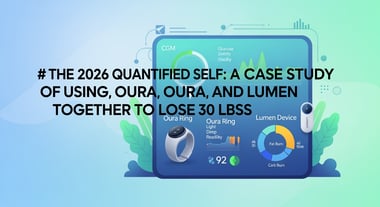
Hello, I'm Master Kim, your empathetic storyteller and editor here at BeSlim.me. I've walked alongside countless individuals on their health journeys, witnessing the raw, human struggles that come with trying to reclaim control over our bodies and minds. Today, I want to share my own story—not as some distant narrator, but as someone who's been there, drowning in the overwhelm of fitness trackers like Whoop and Oura. If you've ever stared at your Oura ring scores, feeling more confused than empowered, this is for you. It's a tale of turning data overload into a practical weight loss plan, rooted in real effort, emotional resilience, and the kind of consistency that builds lasting change. No miracles here—just honest work and the quiet victories that follow.
This isn't just my story; it's a how-to guide wrapped in empathy, designed to help you harness your wearable data for meaningful progress. We'll focus on the Oura ring as our core tool, with nods to Whoop for those using both, emphasizing how these devices can reveal insights into sleep, recovery, and activity that directly impact weight loss. Let's dive in, step by step, and remember: your journey is valid, no matter where you start.
The Struggle (The 'Before')
I remember the days when my bathroom scale felt like an enemy, and my Oura ring was just another gadget gathering dust on my nightstand. At 42, I was carrying an extra 45 pounds that had crept on over years of stressful work, inconsistent eating, and nights where sleep was more of a wish than a reality. I'd wake up to my Oura app buzzing with scores—readiness hovering around 60, sleep efficiency in the red, and HRV (heart rate variability) numbers that screamed "you're not recovering." Whoop, which I tried pairing with it for strain tracking, only amplified the noise: high strain days with no payoff in energy or weight loss. It was like being handed a map in a foreign language—overwhelming data without a clue how to use it.
Emotionally, it hit hard. I'd scroll through my Oura insights, seeing patterns of poor sleep linked to late-night snacking, but instead of motivation, it fueled self-doubt. "Why can't I just fix this?" I'd think, staring at my reflection. Failed attempts piled up: crash diets that left me exhausted, gym memberships I abandoned after a week because my readiness scores tanked from overtraining, and apps promising quick fixes that ignored the mental toll. One particularly low point was after a family gathering where I felt invisible, buried under layers of insecurity. My cortisol levels, inferred from Oura's stress metrics, were through the roof, and I knew it was sabotaging my metabolism, but knowledge alone wasn't enough. I was drowning in data, paralyzed by analysis, and the weight wasn't budging. It wasn't just physical; it was a cycle of frustration, where every low score felt like a personal failure, eroding my confidence bit by bit.
I tried everything—or so I thought. Intermittent fasting apps synced with my Oura, but I'd break the fast early due to hunger pangs that my body battery couldn't handle. Whoop's recovery alerts would tell me to rest, but I'd push through, only to crash harder. The emotional weight was heavier than the pounds: isolation from avoiding social events, the guilt of unfinished goals, and that nagging voice saying, "You're not disciplined enough." If this resonates with you, know that I see you. These struggles aren't weaknesses; they're human, and they're the soil from which real change grows.
The Turning Point (The 'Solution')
The shift didn't come from a lightning bolt of inspiration but from a quiet moment of surrender. One evening, after another disappointing weigh-in, I sat down with my Oura app not to judge the numbers, but to understand them. I realized the data wasn't the enemy—it was a mirror reflecting my habits, and I needed to turn it into an actionable plan. That's when I dove deeper into how wearables like Oura and Whoop could guide a sustainable weight loss strategy, blending tech with science-backed principles. No more guessing; it was time to build a plan around my body's signals.
First, I focused on sleep as the foundation. Oura's detailed sleep tracking showed me patterns: inconsistent bedtimes leading to fragmented REM and deep sleep stages, which directly affected my hunger hormones. Scientifically, this ties into leptin resistance, where poor sleep disrupts the hormone that signals fullness, making overeating more likely. Research from the National Institutes of Health highlights how sleep deprivation can impair leptin signaling, leading to increased calorie intake. Armed with this, I set a non-negotiable bedtime routine, aiming for an Oura sleep score above 80 by dimming lights early and avoiding screens. Whoop complemented this by tracking my recovery, ensuring I didn't overdo workouts on low-readiness days.
Next, cortisol management became key. My Oura ring's daytime stress metrics revealed spikes during work hours, correlating with afternoon cravings. Chronic stress elevates cortisol, which promotes fat storage, especially around the midsection. A study published on Mayo Clinic's site explains how managing cortisol through mindfulness can aid weight loss, by reducing emotional eating. I incorporated short meditation sessions, tracked via Oura's relaxation prompts, and used Whoop's strain data to balance high-intensity days with rest. This wasn't about perfection; it was about consistency, building habits that aligned with my body's rhythms.
Habit formation was the glue holding it all together. Drawing from principles like those in atomic habits, I broke down my plan into micro-actions: using Oura's activity scores to aim for 8,000 steps daily, syncing meals to my body's natural energy peaks shown in readiness data. For weight loss, I adopted a calorie deficit through whole foods, but guided by data—eating more protein on days when HRV was low to support recovery. According to the Centers for Disease Control and Prevention, gradual habit changes supported by tracking lead to sustainable weight management, emphasizing behavior over quick fixes. I created a simple journal: log Oura scores, note one win (like hitting a sleep goal), and plan the next day's actions. Whoop helped by quantifying strain, so I could adjust workouts—HIIT on high-readiness days, walks on low ones.
This turning point wasn't flashy; it was methodical. I consulted a nutritionist to personalize it, ensuring the plan respected my data without obsession. Slowly, the overwhelm faded, replaced by empowerment. If you're at this crossroads, start small: pick one metric, like sleep, and build from there. Your body is speaking through these devices—listen, and let science guide the response.
The Success (The 'After')
Fast forward six months, and the transformation was profound—not just in the 32 pounds I'd lost, but in how I felt alive again. My Oura readiness scores climbed to consistent 85+, with sleep efficiency hitting 90% most nights. Whoop's data showed balanced strain and recovery, no more burnout cycles. Physically, clothes fit better, energy surged, and that midsection fat I'd battled began to melt away. But the real win was emotional: confidence returned, social outings became joyful instead of dreaded, and I no longer hid from mirrors.
Life transformed in ways I hadn't anticipated. Mornings started with purpose—checking my Oura app not with dread, but excitement, using insights to tweak my day. A typical routine now: wake to a high readiness score, fuel with a protein-rich breakfast, hit steps during work breaks, and wind down early for optimal sleep. The weight loss felt steady, about 1-2 pounds per week, grounded in effort rather than extremes. Challenges arose, like a stressful week tanking my HRV, but the plan's flexibility—rest more, eat mindfully—kept me on track.
Psychologically, it rebuilt my self-trust. No more failed attempts haunting me; each data point was a lesson, not a judgment. I even shared my progress with friends, inspiring a few to sync their own wearables. The journey taught me that weight loss isn't about numbers alone—it's reclaiming your narrative, one consistent choice at a time. If I can do this, so can you. Your scores are tools, not tyrants; wield them with kindness toward yourself.
Key Lessons for Your Journey
Prioritize Sleep as Your Weight Loss Superpower: Use your Oura ring to track and improve sleep quality, aiming for consistent bedtimes. Remember, better rest regulates hunger hormones like leptin, making it easier to stick to healthy eating without willpower battles.
Manage Stress with Data-Driven Habits: Monitor cortisol indicators via Oura's stress metrics and Whoop's recovery scores. Incorporate daily mindfulness or light activity to keep levels in check, preventing stress-induced fat storage and emotional eating.
Build Habits Around Your Body's Signals: Start small by journaling one Oura metric daily and linking it to an action, like adjusting workouts based on readiness. Focus on consistency over perfection for sustainable weight loss, drawing from habit formation science to create lasting change.
There you have it—my raw, real path from data drown to empowered action. At BeSlim.me, we're here to support your story. If this sparked something in you, grab your Oura or Whoop, and let's turn those scores into steps forward. You've got this.
References
- Research from the National Institutes of Health highlights how sleep deprivation can impair leptin signaling - ncbi.nlm.nih.gov
- A study published on Mayo Clinic's site explains how managing cortisol through mindfulness can aid weight loss - mayoclinic.org
- According to the Centers for Disease Control and Prevention, gradual habit changes supported by tracking lead to sustainable weight management - cdc.gov

Medical Disclaimer
The content on this website is for informational and educational purposes only. It is not intended as medical advice and should not be relied upon as a substitute for consultations with qualified healthcare professionals who are familiar with your individual medical needs. Always seek the advice of your physician or other qualified healthcare provider with any questions you may have regarding a medical condition. Never disregard professional medical advice or delay in seeking it because of something you have read on this website.