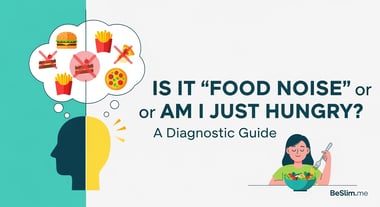
As Master Kim, your Behavioral Psychologist and Solution Consultant at BeSlim.me, I'm here to guide you through the often frustrating challenge of emotional eating. If you've ever found yourself reaching for a snack not out of hunger, but to soothe stress, boredom, or sadness, you're not alone. This is completely normal—millions struggle with it daily, and it's a common hurdle on the path to healthier habits. The good news? Mindful eating isn't just a buzzword; it's a powerful, evidence-based tool rooted in behavioral science that can help you break free. In this Q&A explainer, we'll dive into why emotional eating happens, how mindful eating addresses it, and practical steps to make it work for you. Let's explore this together with understanding and actionable insights.
Why Does Emotional Eating Happen, and Can Mindful Eating Help?
Emotional eating is more than just a bad habit—it's a deeply ingrained response driven by our brain's wiring, hormones, and learned behaviors. Understanding the "why" is the first step to change, as it empowers you to approach it with compassion rather than self-judgment. Below, I'll break it down in a Q&A format to make it clear and relatable.
What Exactly Is Emotional Eating?
Emotional eating occurs when we use food to cope with feelings rather than to satisfy physical hunger. It's like a quick emotional bandage—comforting in the moment but often leading to guilt or overeating later. Psychologically, this ties into habit loops, a concept from behavioral science where a cue (like stress) triggers a routine (eating) for a reward (temporary relief). According to research, these loops form in the brain's basal ganglia, making them automatic over time. For instance, if work stress consistently leads to snacking, your brain wires that connection, making it harder to resist without intervention.
What's the Role of Stress and Hormones in This?
Chronic stress plays a huge role because it elevates cortisol, the "stress hormone," which can increase appetite and cravings for high-sugar, high-fat foods. This isn't your fault—it's biology. When stressed, your body enters a fight-or-flight mode, and cortisol signals your brain to seek quick energy sources, often overriding rational decisions. Studies show that elevated cortisol levels are linked to emotional eating patterns, particularly in response to negative emotions. This hormonal surge depletes willpower, a finite resource explained by ego depletion theory, where self-control wears out like a muscle after repeated use. That's why after a tough day, that pint of ice cream feels irresistible—it's your brain's way of seeking dopamine, the feel-good chemical, to counterbalance the stress.
How Does Mindful Eating Fit In?
Mindful eating is the practice of being fully present during meals, paying attention to hunger cues, flavors, and emotions without judgment. Rooted in mindfulness-based stress reduction (MBSR) techniques, it disrupts those automatic habit loops by inserting awareness between the cue and the response. Scientifically, it activates the prefrontal cortex—the brain's decision-making center—helping you pause and choose differently. For example, instead of mindlessly eating chips while watching TV to numb boredom, mindful eating encourages you to notice the emotion first, reducing impulsive actions. Research supports this: mindful eating interventions can significantly reduce emotional eating episodes by fostering greater self-awareness and emotional regulation.
In essence, emotional eating stems from intertwined psychological (habit loops), behavioral (learned responses), and hormonal (cortisol-driven cravings) factors. Mindful eating counters this by building intentionality, but it requires practice to rewire those pathways. If you've tried and failed before, remember: setbacks are part of the process, not a sign of weakness.
Actionable Strategies to Use Mindful Eating Against Emotional Eating
Now that we understand the "why," let's move to solutions. As a behavioral psychologist, I emphasize sustainable changes over quick fixes. Below are five practical, step-by-step strategies presented as Q&As for easy reference. Each one builds on mindful eating principles, with real-life examples to help you apply them immediately. Aim to start small—pick one strategy and practice it for a week before adding more.
Strategy 1: Identify Your Emotional Triggers
Q: How do I start recognizing what sets off my emotional eating?
A: The key is building self-awareness through tracking. Emotional eating often hides behind vague feelings, so pinpointing triggers disrupts the habit loop early.
- Step 1: Keep a simple "emotion-food journal" for 7 days. Before eating, note your mood, the time, and any stressors (e.g., "Feeling anxious after a work call—reaching for cookies").
- Step 2: Rate your physical hunger on a scale of 1-10 (1 being not hungry at all). If it's below 5 and emotions are high, pause for 5 minutes.
- Step 3: Reflect weekly: Look for patterns, like eating more during evenings or after arguments.
Example: Sarah noticed she binged on chocolate after family disputes. By journaling, she realized it was loneliness triggering her, not hunger. This awareness alone reduced her episodes by 30% in the first month, as she could address the emotion directly.
Strategy 2: Practice the Pause-and-Reflect Technique
Q: What if I'm already reaching for food—how can mindfulness stop me?
A: Insert a mindful pause to break the automatic response, drawing from cognitive behavioral therapy (CBT) principles that emphasize interrupting negative patterns.
- Step 1: When the urge hits, stop and take three deep breaths. Ask yourself, "Am I truly hungry, or is this emotional?"
- Step 2: Engage your senses: Hold the food, smell it, and notice its texture without eating yet. This grounds you in the present.
- Step 3: If it's emotional, choose a non-food alternative like a short walk or calling a friend, then revisit the food mindfully if hunger persists.
Example: Mike, stressed from deadlines, used this during lunch breaks. Pausing helped him realize he was eating to avoid work anxiety, leading him to journal instead. Over time, this built resilience, turning impulsive eating into deliberate choices.
Strategy 3: Eat with Full Attention
Q: How can I make meals more mindful to prevent emotional overeating?
A: Ditch distractions to tune into your body's signals, which research shows can improve satiety and reduce calorie intake.
- Step 1: Sit down without screens or multitasking—focus solely on your meal.
- Step 2: Chew slowly, savoring each bite. Notice flavors, textures, and how your hunger changes midway.
- Step 3: Stop when you're 80% full, and wait 20 minutes before seconds (this allows fullness hormones like leptin to kick in).
Example: Lisa, an emotional eater during TV binges, switched to distraction-free dinners. She discovered she enjoyed food more and ate less, as mindfulness highlighted when she was full, cutting her nightly snacking habit sustainably.
Strategy 4: Build Emotional Coping Alternatives
Q: What if food is my only comfort—how do I replace it mindfully?
A: Create a "toolkit" of non-food responses to rewire reward pathways, supported by behavioral science on habit substitution.
- Step 1: List 5-10 feel-good activities that match your triggers (e.g., for stress: yoga or music; for boredom: puzzles).
- Step 2: Pair them with mindful eating by starting with a small, healthy snack if needed, then transitioning to the activity.
- Step 3: Track successes in your journal to reinforce the new habit, celebrating small wins like "Chose tea and a book over chips."
Example: Tom replaced late-night emotional snacking with herbal tea and reading. This not only addressed his sadness from loneliness but also improved his sleep, making the change feel rewarding and long-term.
Strategy 5: Incorporate Mindful Check-Ins Throughout the Day
Q: How do I maintain mindfulness beyond meals to tackle emotional eating?
A: Regular check-ins prevent buildup of unaddressed emotions, drawing from mindfulness meditation practices that reduce overall stress. Evidence indicates that daily mindfulness practices can lower cortisol and emotional eating, promoting sustained behavior change.
- Step 1: Set phone reminders for 3 daily check-ins (morning, midday, evening) to assess your emotional state.
- Step 2: Spend 2-3 minutes breathing deeply and noting feelings without judgment.
- Step 3: If emotions are high, proactively choose a coping strategy before hunger cues intensify.
Example: Emma, prone to work-related stress eating, used check-ins to spot rising tension early. This proactive approach halved her impulsive episodes, fostering a sense of control and emotional balance.
These strategies are designed for gradual integration, focusing on progress over perfection. Remember, behavioral change takes time—typically 66 days to form a new habit, per studies—so be patient with yourself.
Wrapping Up: Change Is Within Your Reach
You've taken a brave step by exploring this, and that's worth celebrating. Emotional eating doesn't define you; it's a hurdle many overcome with tools like mindful eating. By understanding the science and applying these steps consistently, you'll build resilience, enjoy food more intentionally, and reclaim control over your habits. You're capable of this transformation—start small today, and watch how it unfolds. If you need more personalized guidance, BeSlim.me is here to support you every step of the way.
References
- Daily mindfulness practices can lower cortisol and emotional eating - healthline.com


Medical Disclaimer
The content on this website is for informational and educational purposes only. It is not intended as medical advice and should not be relied upon as a substitute for consultations with qualified healthcare professionals who are familiar with your individual medical needs. Always seek the advice of your physician or other qualified healthcare provider with any questions you may have regarding a medical condition. Never disregard professional medical advice or delay in seeking it because of something you have read on this website.